
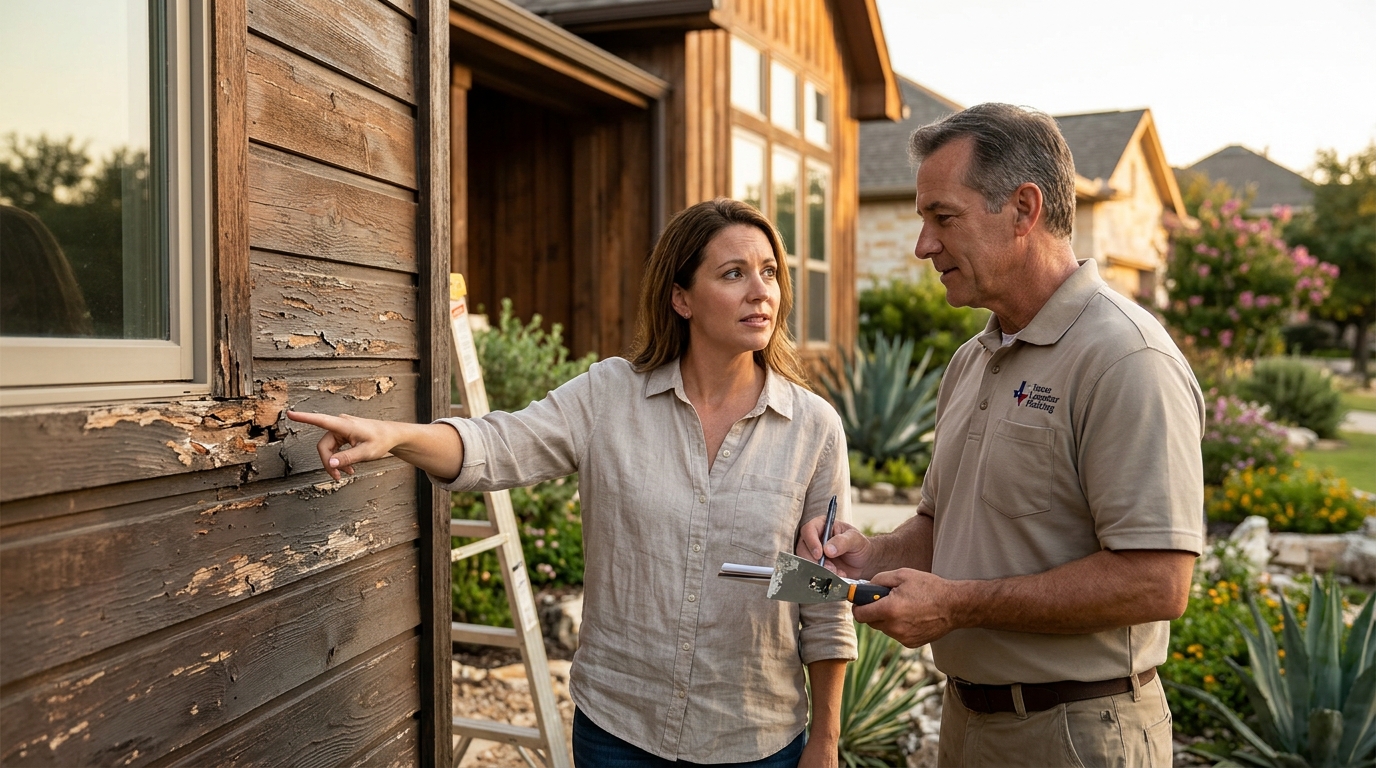
Repainting damaged wood siding without proper repair leads to peeling, bubbling, and premature failure. Texas Lonestar Painting emphasizes that surface preparation is the foundation of a durable exterior finish. Identifying structural and surface defects before applying new paint ensures your investment lasts for years in the San Antonio climate.
1. Visible Rot and Soft Spots
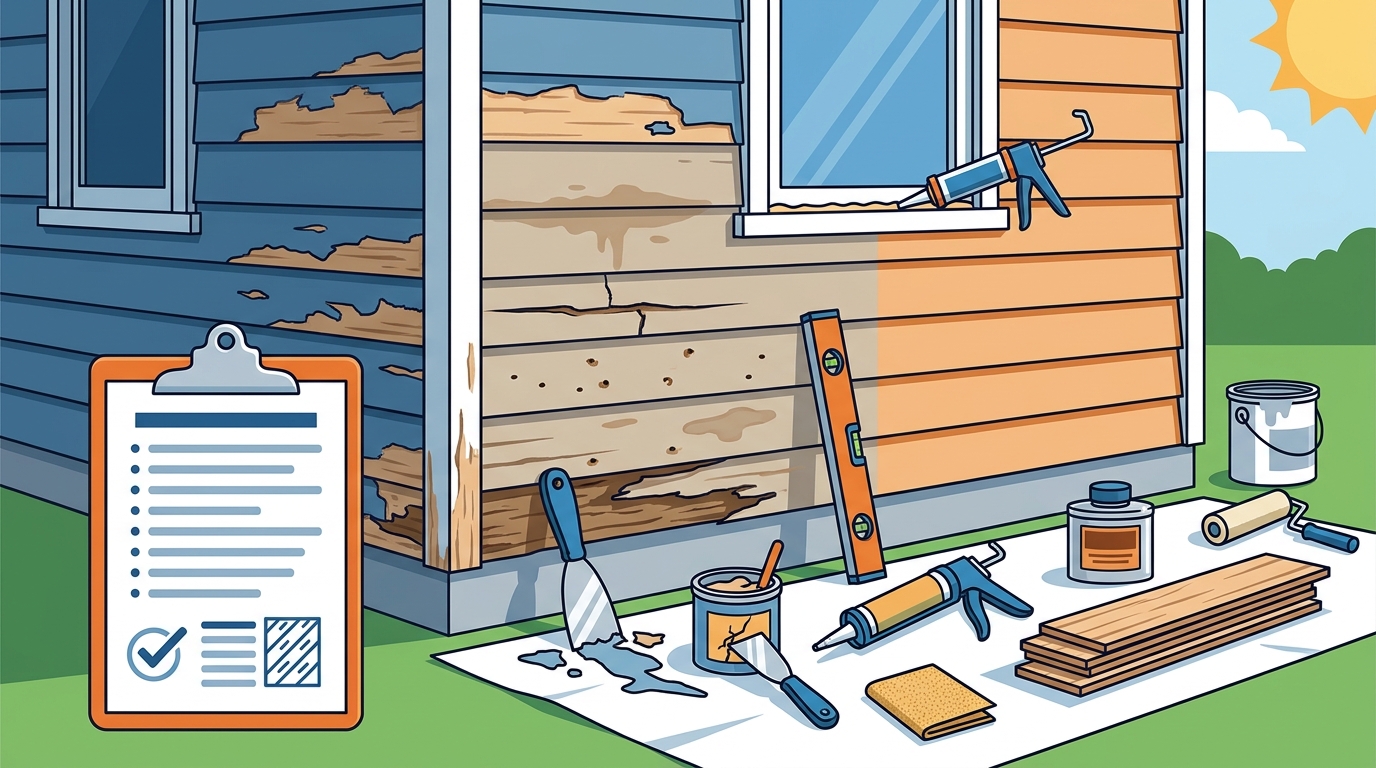
Soft, spongy, or crumbling wood indicates active rot that must be replaced. Wood rot is a fungal decay process that weakens the structural integrity of your siding. If a screwdriver pushes easily into the wood, the material is compromised. Painting over rot will not stop the decay; it will only trap moisture and accelerate the breakdown of the board.
2. Peeling and Bubbling Paint
Peeling or bubbling paint signals poor adhesion caused by moisture or inadequate prep. When paint lifts in bubbles or flakes off in sheets, it means the surface was not properly cleaned or primed during the last application. This often happens when moisture gets trapped behind the paint film. You must scrape away all loose material and sand the surface smooth before new paint can bond correctly.
3. Cracking and Splitting
Deep cracks and splits allow water intrusion that damages the home's interior. Wood naturally expands and contracts with temperature changes, leading to splits over time. Small hairline cracks may be sealed, but deep splits require structural repair. In San Antonio, intense sun and humidity accelerate this process, making regular inspection critical for preventing water damage to your home's framing.
4. Warping and Bowing
Warping or bowing boards create gaps that trap moisture and pests. When wood boards bend or twist out of shape, they no longer sit flush against the wall. This creates channels for rainwater to flow behind the siding. Warped boards often need to be replaced or re-secured to ensure a flat, uniform surface for painting.
5. Mold and Mildew Growth
Black or green spots indicate mold that must be removed before painting. Mold is a common issue in humid climates like Central Texas. It feeds on organic materials and can stain the wood permanently. Professional cleaning with specialized solutions is required to kill the mold and remove the stains. Painting over active mold will cause it to grow back through the new paint layer.
6. Nail Pops and Loose Fasteners
Protruding nails and loose screws create entry points for water and pests. As wood dries and shrinks, nails can pop out of the siding. These gaps allow rain to seep behind the boards. All fasteners must be driven back in or replaced with corrosion-resistant screws. This step ensures the siding remains securely attached to the house structure.
7. Fading and Graying
Severe fading and graying indicate UV damage that reduces paint adhesion. When wood turns gray, the surface fibers have degraded due to sun exposure. This rough, chalky surface does not hold paint well. Sanding or power washing is necessary to remove the degraded layer and expose fresh wood for proper priming and painting.
Choosing the Right Repair Approach
Select the repair method based on the severity of the damage. Minor surface issues like small cracks or light fading can be handled with sanding and sealing. Structural problems like rot or warping require board replacement. Always address the root cause of the damage before applying new paint to ensure a long-lasting finish.
Frequently Asked Questions
Can I paint over small cracks in wood siding?
You can paint over small hairline cracks if you first fill them with exterior-grade caulk. However, deep cracks or splits should be repaired structurally before painting to prevent water intrusion.
How do I know if my siding has rot?
Check for soft, spongy areas or discoloration. If a screwdriver pushes easily into the wood, it is likely rotted. Rotted sections must be cut out and replaced with new wood.
Do I need to replace all the siding if some boards are damaged?
No, you only need to replace the damaged boards. Localized repairs are common and cost-effective. A professional can match the new boards to the existing siding for a seamless look.
How often should I inspect my wood siding?
Inspect your siding at least once a year, preferably in the spring. Look for signs of damage, peeling paint, or moisture issues. Regular inspections help you catch problems early before they become major repairs.
Is pressure washing safe for wood siding?
Yes, but it must be done carefully. Use a low-pressure setting to avoid damaging the wood fibers. Professional cleaners use appropriate techniques to remove dirt and mold without causing harm.
What is the best primer for repaired wood siding?
Use an oil-based or high-adhesion acrylic primer on bare wood. This creates a strong bond between the wood and the topcoat paint. Proper priming is essential for preventing peeling and ensuring a smooth finish.
Next Steps for Your Project
If you have identified any of these signs on your home, it is time to schedule a professional assessment. Texas Lonestar Painting provides comprehensive exterior services that include detailed surface preparation and repair. To get started, for a free estimate and consultation.