
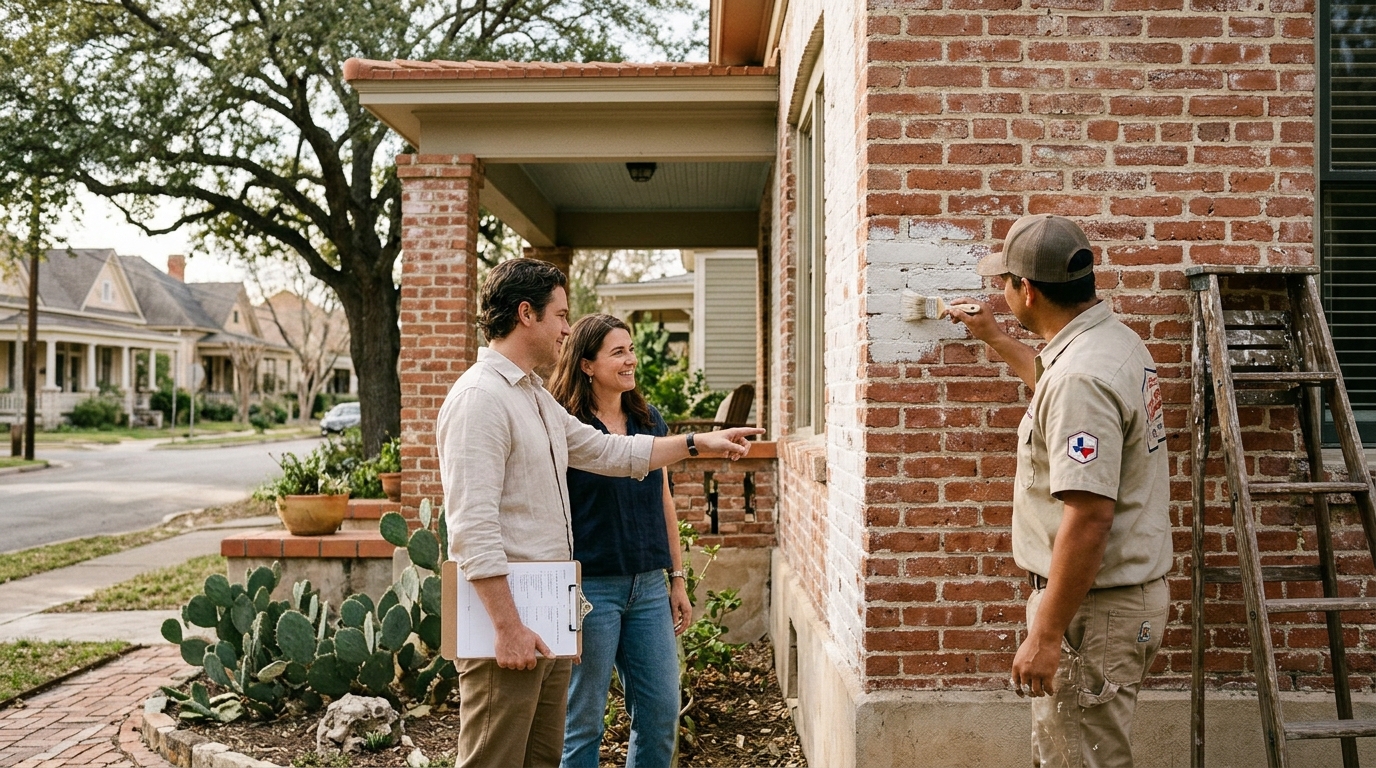
Whitewashing brick in San Antonio is subject to strict local ordinances and historic district guidelines that prioritize the preservation of original masonry. Homeowners in designated historic zones must obtain permits and adhere to specific color and application standards to avoid fines or mandatory reversal of work. Texas Lonestar Painting helps homeowners navigate these regulations by ensuring all exterior modifications comply with local preservation codes while maintaining the structural integrity of the brick.
Understanding San Antonio Historic Districts
San Antonio contains numerous designated historic districts, including the Alamo District and the Olmos Park Historic District. These areas are protected under local ordinances that regulate exterior changes to maintain the neighborhood's architectural character. A historic district is a geographically definable area that possesses a significant concentration, linkage, or continuity of sites, buildings, or structures united historically or aesthetically by developing characteristics. Homeowners in these zones cannot alter the exterior appearance of their property without prior approval from the city's historic preservation office.
The rules vary depending on the specific district. Some districts strictly prohibit any paint application on brick, while others allow for specific types of lime-washing or whitewashing if it matches the historical context of the era. For example, the Olmos Park district has specific guidelines regarding the treatment of brick facades to ensure that the natural texture and color of the masonry are preserved. Understanding which district your home falls into is the first critical step before considering any exterior changes.
The Difference Between Paint and Lime-Wash
Preservation authorities distinguish sharply between modern acrylic paint and traditional lime-wash or whitewash. Modern paint is a film-forming coating that traps moisture within the brick, leading to spalling and deterioration over time. Lime-wash is a breathable mineral coating that allows moisture to escape, which is essential for the longevity of historic masonry. Preservation rules often ban opaque acrylic paints on historic brick because they alter the visual texture and cause physical damage to the substrate.
When a homeowner seeks to whitewash brick in a historic zone, the application method matters as much as the material. The coating must be applied in a way that enhances the brick's texture rather than hiding it. This technique, often referred to as a limewash or whitewash, is generally more acceptable to preservation boards than a solid coat of paint. Texas Lonestar Painting utilizes breathable, mineral-based products that align with preservation standards, ensuring that the brick continues to breathe and age gracefully.
Permitting and Approval Processes
Before any work begins, homeowners must submit an application for a Certificate of Appropriateness (COA) to the San Antonio Historic Preservation Commission. This process involves submitting detailed plans, including the specific product to be used, the color, and the application method. The commission reviews the proposal to ensure it does not detract from the historic character of the district. A Certificate of Appropriateness is a permit issued by a local historic preservation commission that authorizes exterior changes to a property within a designated historic district.
The review process can take several weeks, and approval is not guaranteed. If the proposed whitewash does not meet the district's guidelines, the commission may request modifications or deny the application entirely. Homeowners who proceed without a permit risk significant fines and may be required to remove the coating at their own expense. Working with a professional who understands the local code, such as Texas Lonestar Painting, can streamline this process by ensuring that all submissions are accurate and compliant with current regulations.
Common Violations and Reversal Requirements
One of the most common violations in San Antonio historic districts is the application of opaque, non-breathable paint over original brick. When this occurs, the preservation board may issue a violation notice requiring the homeowner to remove the paint and restore the brick to its original condition. This reversal process is often expensive and can cause further damage if not done correctly. The cost of stripping paint from historic brick is significantly higher than the cost of proper maintenance or breathable coating application.
Another frequent issue is the use of high-pressure washing on historic masonry. While pressure washing is a standard cleaning method for modern homes, it can erode the soft mortar and brick faces of older structures. Preservation rules typically mandate the use of low-pressure cleaning methods or soft washing techniques to avoid damaging the historic fabric. Homeowners must be aware that even cleaning activities may require approval if they involve methods that could alter the appearance of the exterior.
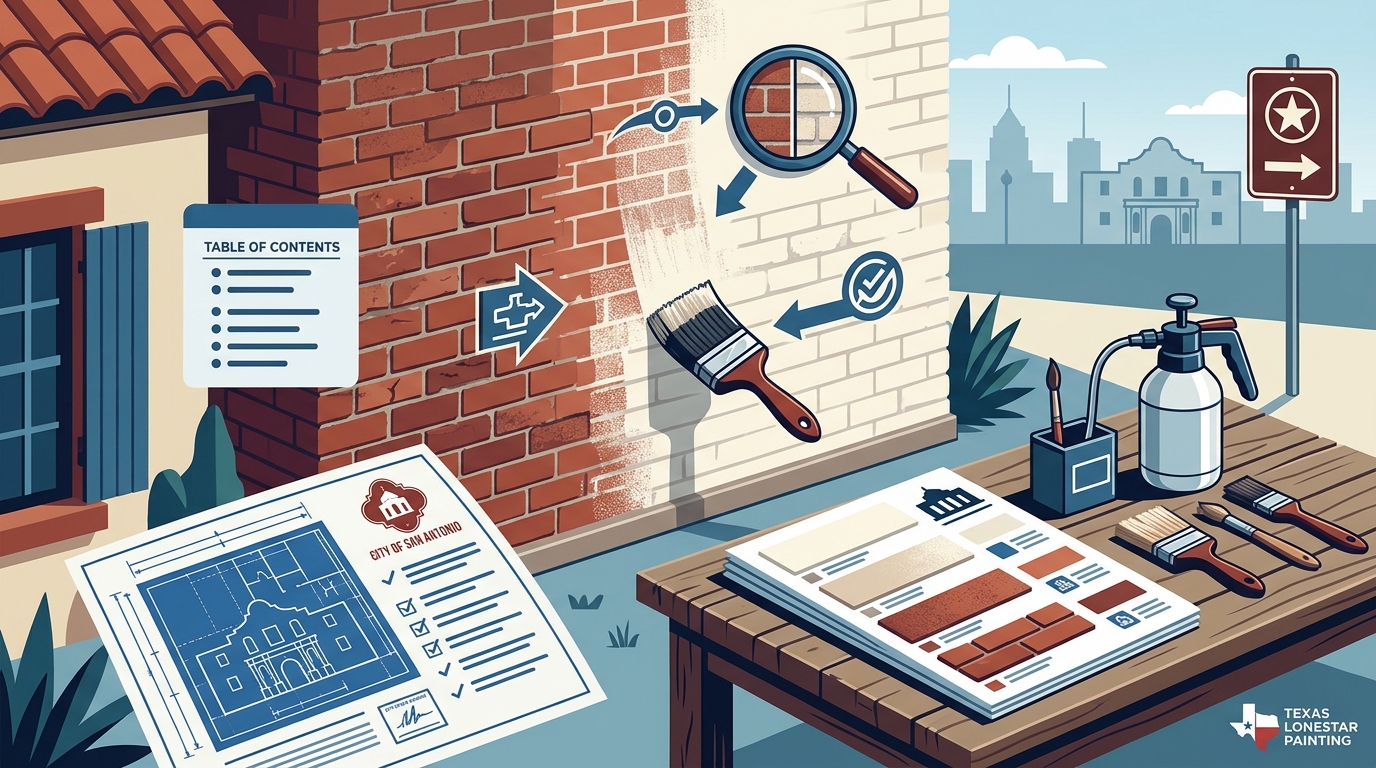
Key Takeaways
- San Antonio historic districts have specific rules regarding exterior changes, including brick whitewashing.
- Modern acrylic paint is generally prohibited on historic brick due to moisture trapping and visual alteration.
- Lime-wash and whitewash are breathable mineral coatings that are often acceptable in historic zones.
- A Certificate of Appropriateness is required before making any exterior changes in a historic district.
- High-pressure washing can damage historic masonry and is often restricted by preservation codes.
- Working with a professional familiar with local preservation rules can prevent costly violations.
Frequently Asked Questions
Can I paint my brick house in a San Antonio historic district?
Generally, no. Most historic districts in San Antonio prohibit the application of opaque paint on brick. You must consult the specific guidelines for your district and obtain a Certificate of Appropriateness before making any changes.
What is the difference between whitewash and paint?
Whitewash is a breathable mineral coating that allows moisture to escape, while paint is a film-forming coating that traps moisture. Whitewash is often preferred in historic preservation because it protects the brick without causing damage.
Do I need a permit to clean my brick exterior?
Yes, if your home is in a historic district. Cleaning methods, especially those involving pressure washing, may require approval to ensure they do not damage the historic masonry.
What happens if I paint my brick without a permit?
You may face fines and be required to remove the paint at your own expense. The removal process can be costly and may cause further damage to the brick if not done correctly.
How do I find out if my home is in a historic district?
You can check the San Antonio city map or contact the San Antonio Historic Preservation Commission. They can provide information on whether your property is within a designated historic district and what rules apply.
Conclusion
Navigating historic preservation rules in San Antonio requires careful planning and adherence to local guidelines. Homeowners must understand the specific regulations for their district and obtain the necessary permits before making any exterior changes. Texas Lonestar Painting provides expert guidance and professional services that comply with preservation standards, ensuring your home's historic character is preserved while maintaining its beauty and integrity. To discuss your project and ensure compliance, for a consultation.