
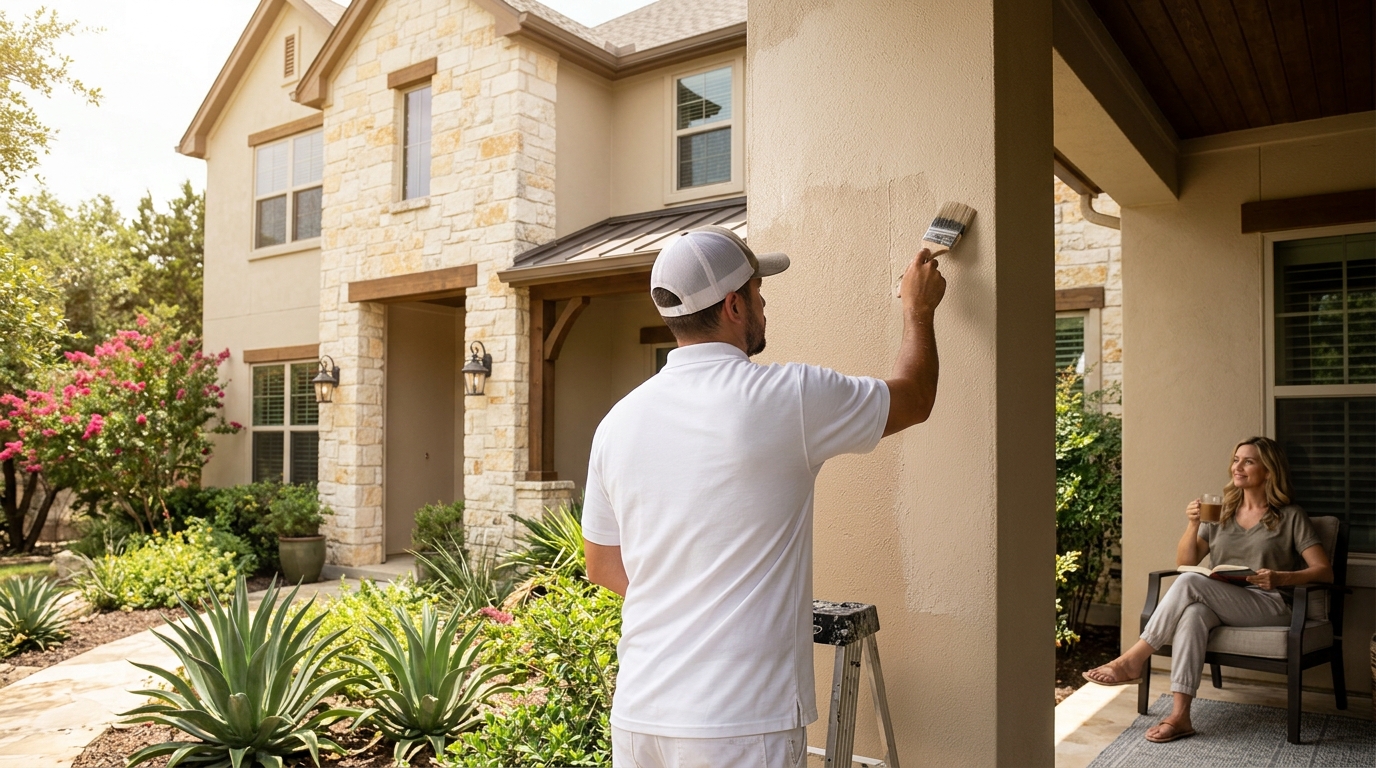
San Antonio's intense sun and humidity demand specific exterior paint coatings. The best options are high-quality acrylic latex and elastomeric coatings. These materials resist UV fading, prevent moisture intrusion, and expand to bridge hairline cracks. Choosing the right finish protects your home's structural integrity and maintains curb appeal in the Texas climate.
Acrylic Latex: The Standard for Texas Homes
Acrylic latex paint is the most common exterior coating for residential properties in Central Texas. It is a water-based system that offers superior flexibility compared to older oil-based alkyd paints. This flexibility allows the paint film to expand and contract with the temperature fluctuations typical of San Antonio. When the sun heats a stucco wall in the afternoon, the coating must move without cracking. Acrylic latex handles this thermal cycling effectively.
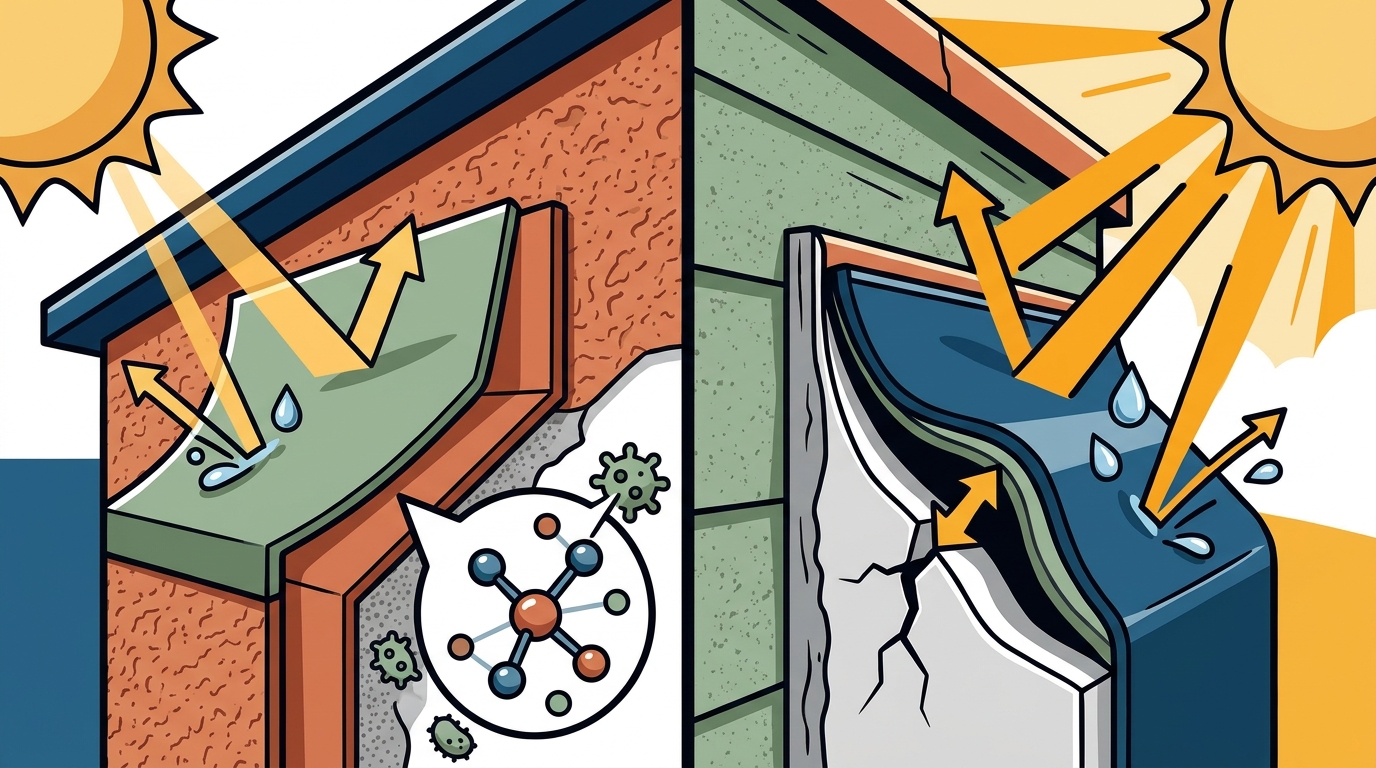
The primary benefit of this coating is its breathability. San Antonio experiences high humidity, especially during the summer months. Moisture trapped inside a wall can lead to mold growth and structural rot. Acrylic latex allows water vapor to escape from the substrate while blocking liquid water from entering. This balance is critical for maintaining the health of your home's exterior envelope. Homeowners should look for nearly all acrylic formulations rather than vinyl acrylic blends. The pure acrylic binder provides better adhesion and longer-lasting color retention under intense UV exposure.
Elastomeric Coatings for Stucco and Masonry
Elastomeric paint is a thick, rubberized coating designed specifically for masonry surfaces like stucco and brick. It is a single-component, water-based system that cures to form a flexible, waterproof membrane. This coating is ideal for homes with existing hairline cracks in the stucco. The elastomeric film is thick enough to bridge these small gaps, preventing water from penetrating the substrate. This is a significant advantage over standard latex paints, which may crack along the same lines as the underlying material.
However, elastomeric coatings require meticulous surface preparation. The surface must be clean, dry, and free of loose material. If the stucco is failing or has large structural cracks, painting over it with elastomeric paint will not solve the underlying problem. It is a protective shield, not a structural repair. For homes with solid, well-maintained stucco, this coating offers exceptional durability and a smooth, seamless finish. It also provides a higher level of water resistance, which is beneficial during the heavy summer thunderstorms common in the region.
UV Resistance and Color Retention
San Antonio receives some of the highest annual UV index readings in the United States. This intense solar radiation breaks down the chemical bonds in paint, causing colors to fade and chalk. Chalking is the process where the surface of the paint turns to a fine powder, exposing the binder underneath. This weakens the coating and makes it susceptible to peeling and flaking. To combat this, you need coatings with high-quality pigments and UV-stable binders.
Lighter colors generally perform better in hot climates because they reflect more solar energy. Dark colors absorb heat, which can cause the paint film to overheat and degrade faster. However, modern pigment technology allows for darker colors with better UV stability. When selecting a color, consider the orientation of the wall. South and west-facing walls receive the most direct sunlight. Using a higher-grade paint on these surfaces can extend the life of the finish. Texas Lonestar Painting assesses your home's exterior materials and sun exposure to recommend the most durable color and coating combination.
Managing Humidity and Moisture Intrusion
Humidity is a silent killer for exterior finishes. In San Antonio, high humidity levels can cause condensation on surfaces, especially during the transition from day to night. This moisture can promote the growth of algae, mold, and mildew. These biological contaminants not only look unsightly but also degrade the paint film. They feed on the organic components of the paint, causing it to break down prematurely. A proper exterior coating must resist these biological attacks.
The Critical Role of Surface Preparation
The best paint in the world will fail if applied to a poor surface. Surface preparation is the single most important factor in the longevity of an exterior coating. This process involves cleaning, repairing, and priming the substrate. In San Antonio, this often includes power washing to remove years of accumulated dirt and biological growth. It also involves scraping off any loose or peeling paint. Applying paint over loose material is a recipe for failure. The new coat will simply peel off with the old one.
Priming is another critical step. Bare wood, metal, or repaired stucco needs a primer to ensure proper adhesion. Primer seals the porous surface and provides a uniform base for the topcoat. It also blocks stains from bleeding through. For example, a rust stain on a metal flashing will bleed through a standard latex paint if not sealed with a rust-inhibitive primer. Taking the time to prepare the surface correctly ensures that your investment in high-quality paint pays off. It extends the life of the finish and reduces the frequency of repainting.
Key Takeaways
- Acrylic latex is the standard choice for most San Antonio homes due to its flexibility and breathability.
- Elastomeric coatings are ideal for stucco and masonry, offering crack-bridging and waterproofing properties.
- UV resistance is critical in San Antonio; look for paints with high-quality, UV-stable pigments.
- Lighter colors reflect heat and may last longer on south and west-facing walls.
- Humidity management requires coatings with fungicidal properties and proper surface ventilation.
- Surface preparation, including cleaning and priming, is more important than the paint brand itself.
- Regular maintenance and inspection can extend the life of your exterior coating by several years.
Frequently Asked Questions
How often should I repaint my home in San Antonio?
With proper preparation and high-quality coatings, an exterior paint job in San Antonio can last 10 to 15 years. However, this depends on the material, sun exposure, and maintenance. Regular inspections can help you identify when a touch-up or full repaint is needed.
Can I paint over existing peeling paint?
No. You must scrape and sand away all loose and peeling paint before applying a new coat. Painting over loose material will cause the new paint to fail. Proper surface preparation is essential for a durable finish.
What is the difference between acrylic and oil-based paint?
Acrylic paint is water-based, flexible, and breathable. Oil-based paint is more rigid and less breathable. In San Antonio's climate, acrylic is generally preferred because it handles temperature fluctuations and moisture better than oil-based systems.
Do I need a primer for exterior painting?
Yes, primer is essential for bare wood, metal, or repaired areas. It ensures proper adhesion and blocks stains. Even when repainting over existing paint, a primer may be needed if the surface is chalky or stained.
How does humidity affect exterior paint?
High humidity can trap moisture in the walls, leading to mold and mildew growth. It can also slow the drying process. Using breathable coatings and ensuring proper ventilation helps manage humidity and protects the paint finish.
Protect Your Investment with the Right Coating
Choosing the right exterior paint coating is a critical decision for any San Antonio homeowner. The combination of intense sun, high humidity, and temperature fluctuations demands a durable and flexible solution. Acrylic latex and elastomeric coatings offer the best protection for most homes. By focusing on UV resistance, moisture management, and proper surface preparation, you can extend the life of your exterior finish. Texas Lonestar Painting brings local expertise to every project, ensuring your home is protected against the unique challenges of the Texas climate. Schedule a consultation to discuss the best coating options for your property.