

Whitewashing brick is a specialized surface treatment that applies a thin, breathable lime-based wash to masonry. In San Antonio, this process requires careful preparation due to the region's intense heat and humidity. Texas Lonestar Painting provides expert guidance on evaluating your home's brick condition before committing to this aesthetic and protective finish.
Understanding the Whitewash Process
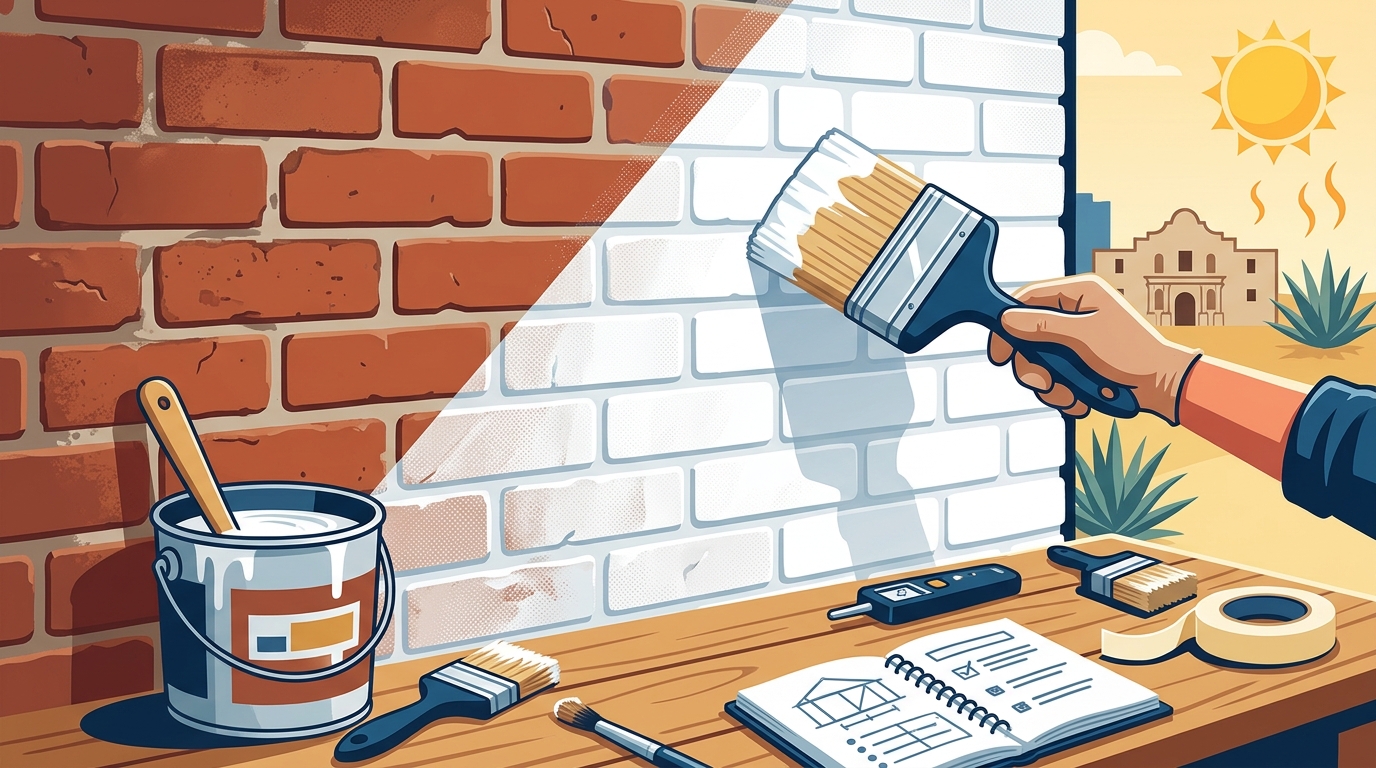
Whitewash is a traditional coating made from hydrated lime and water. Unlike standard paint, it is not a film-forming product. Instead, it penetrates the porous surface of the brick. This creates a translucent, chalky finish that softens the appearance of the masonry. The result is a matte, rustic look that has become popular in modern Texas architecture.
The primary benefit of this treatment is breathability. Standard exterior paints can trap moisture inside the brick. In a humid climate, this trapped moisture can lead to spalling or cracking. Whitewash allows the brick to release moisture vapor. This helps maintain the structural integrity of the masonry over time. It is a functional choice as much as it is a stylistic one.
Homeowners often confuse whitewashing with painting. Painting covers the brick with an opaque layer. Whitewashing enhances the texture and color of the brick itself. The brick's natural patterns remain visible. This distinction is critical for setting realistic expectations for the final look.
San Antonio Climate and Brick Durability
San Antonio experiences extreme temperature fluctuations and high humidity levels. These conditions place significant stress on exterior masonry. The sun can bleach and degrade unprotected brick over time. Rain and humidity can cause efflorescence, which is the white powdery residue left by dissolved salts. Whitewashing can help mitigate these issues by providing a protective barrier.
The intense UV radiation in Central Texas can fade standard paints quickly. Lime-based whitewash is more resistant to UV degradation. It does not peel or flake like acrylic paints. Instead, it weathers gracefully. This makes it a durable option for long-term exterior maintenance. It protects the brick from the harsh Texas sun.
Humidity is another major factor. Brick is a porous material that absorbs moisture. When that moisture evaporates, it can carry salts to the surface. This cycle can erode the brick face. A breathable whitewash coating slows this process. It helps keep the masonry stable and clean. Understanding this local climate impact is essential before starting any project.
Essential Preparation Steps
Proper surface preparation is the most critical step in whitewashing. The brick must be clean and free of contaminants. Dirt, grease, and old paint will prevent the lime wash from adhering correctly. Texas Lonestar Painting emphasizes the importance of professional cleaning before application. This often involves pressure washing or chemical cleaning to remove biological growth and grime.
Before applying the wash, the brick must be fully dry. Applying lime to wet brick can result in uneven absorption. This leads to blotchy patches that are difficult to correct. The masonry should be dry for at least 48 hours after cleaning. This ensures a uniform finish. Patience during this phase is key to a professional result.
Repairs must be completed before whitewashing. Cracked or crumbling bricks should be replaced or tuck-pointed. Applying a wash over damaged masonry will not fix the underlying structural issue. It may even hide problems that could worsen later. A thorough inspection of the brickwork is necessary. This ensures the surface is sound and ready for treatment.
Application Techniques and Tools
Whitewash is typically applied using a brush, sprayer, or roller. The method chosen affects the final texture and coverage. Brushing allows for greater control and a more traditional look. Spraying is faster but can be less even. Many professionals use a combination of techniques. They may spray the base coat and then brush it in. This ensures deep penetration and a smooth finish.
The consistency of the lime wash is crucial. It should be thin enough to penetrate the brick. If it is too thick, it will sit on the surface. This can lead to peeling or cracking. The mixture is often adjusted based on the porosity of the brick. Softer bricks may absorb more of the wash. Harder bricks may require a thinner application. Testing a small, inconspicuous area is always recommended. according to What Should I
Multiple coats are often necessary to achieve the desired opacity. One coat provides a subtle, ghostly effect. Two or three coats create a more solid white appearance. Each coat must dry completely before the next is applied. This process takes time but yields a durable result. The number of coats is a design choice that depends on your aesthetic goals.
Long-Term Maintenance and Care
Whitewashed brick requires less maintenance than painted brick. It does not need to be scraped or sanded before reapplication. However, it is not permanent. Over time, the wash will fade and weather. Reapplication is typically needed every few years. The frequency depends on the local exposure to sun and rain. Regular inspections can help determine when a refresh is needed.
Cleaning whitewashed brick is straightforward. Gentle washing with water is usually sufficient. Avoid high-pressure washing on the whitewashed surface. This can strip the coating too quickly. Use a soft brush and mild detergent if needed. This preserves the integrity of the lime wash. Proper care extends the life of the finish and maintains its appearance.
It is important to note that whitewash is not a one-time solution. It is a maintenance cycle. Homeowners should budget for periodic reapplication. This ensures the brick remains protected. Texas Lonestar Painting can help you establish a maintenance schedule. This keeps your home looking its best year after year.
Key Takeaways
- Whitewash is a breathable lime-based coating, not a standard paint.
- It allows brick to release moisture, preventing spalling in humid climates.
- San Antonio's UV and humidity levels make breathable coatings ideal for brick.
- Thorough cleaning and drying are mandatory before application.
- Structural repairs must be completed before whitewashing.
- Multiple thin coats are preferred over one thick coat.
- Regular reapplication is required to maintain protection and appearance.
Frequently Asked Questions
Can I whitewash brick myself?
Yes, but it requires skill and patience. Professional application ensures even coverage and proper preparation. DIY attempts often result in uneven finishes if the surface is not cleaned correctly.
How long does whitewash last on brick?
It typically lasts several years, depending on exposure. In San Antonio, reapplication may be needed every 3 to 5 years to maintain protection and color.
Is whitewash waterproof?
No, it is not waterproof. It is water-resistant and breathable. It repels light moisture but allows vapor to escape. This breathability is its primary protective feature.
Can I paint over whitewashed brick?
Yes, but it requires preparation. The whitewash must be sanded or stripped to create a bonding surface. Standard paint will not adhere well to a smooth lime wash.
Does whitewash change the color of the brick?
It lightens the brick significantly. The result is a soft, white or off-white appearance. The original brick texture and pattern remain visible underneath the wash.
Is whitewash safe for the environment?
Yes, lime is a natural material. It is non-toxic and biodegradable. It is a safer alternative to many synthetic paints and sealants.
Conclusion
Whitewashing brick is a durable and aesthetically pleasing option for San Antonio homes. It offers protection against the local climate while enhancing curb appeal. Proper preparation and professional application are key to success. Texas Lonestar Painting is ready to help you achieve a flawless finish. to discuss your project and schedule a consultation.