
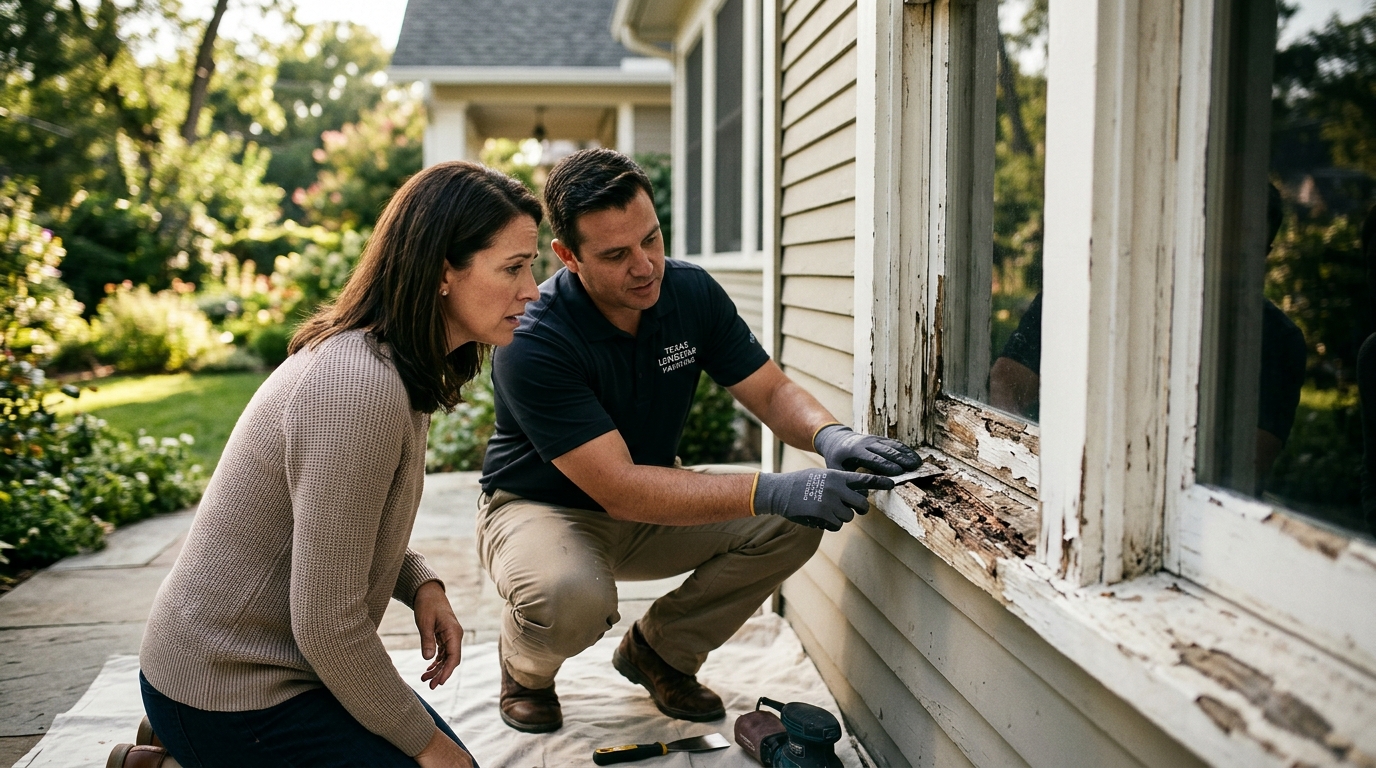
Homeowners must identify and repair all wood rot before applying any exterior paint. Painting over rot traps moisture inside the wood, accelerating decay and causing the new finish to peel or bubble within months. A durable exterior project requires a stable, dry substrate. Ignoring structural damage during a repaint is a costly mistake that compromises both the aesthetic and the integrity of your home.
Understanding the Nature of Wood Rot
Wood rot is a biological process where fungi break down the cellulose in wood, turning it soft, spongy, or crumbly. This decay is not a surface issue; it is a structural failure that weakens the material from the inside out. In the San Antonio climate, high humidity and intense sun create an environment where untreated wood is particularly vulnerable to fungal growth.
Homeowners often mistake rot for simple weathering or graying. Weathering is a cosmetic change caused by UV exposure, while rot is a physical degradation of the wood fibers. If you press a screwdriver into the wood and it sinks in easily, the wood is likely rotted. This distinction is critical because weathered wood can be cleaned and painted, but rotted wood must be replaced or repaired before any coating is applied.
Identifying the Source of Moisture
Wood rot is a symptom, not the root cause. The underlying issue is almost always trapped moisture. Before repairing the wood, you must identify and fix the source of the water intrusion. Common culprits include failed window flashing, clogged gutters, or gaps in the siding where water can wick into the sheathing.
If you repair the rot but leave the moisture source active, the new wood will rot again within a few years. Assessing the entire exterior envelope ensures that water is directed away from the structure. This proactive approach ensures that the repair is permanent rather than a temporary fix. Addressing the source is the most important step in any exterior restoration project.
Choosing the Right Repair Method
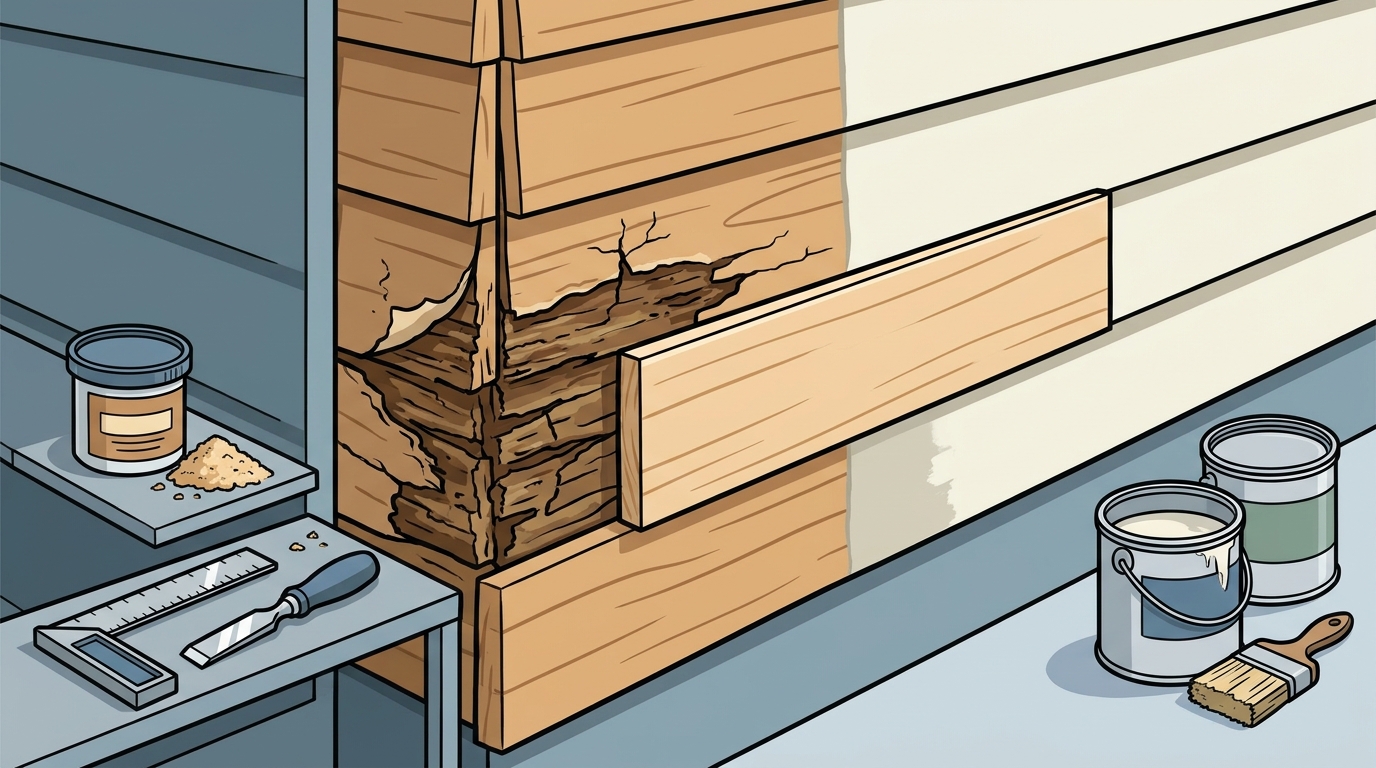
The method of repair depends on the extent of the damage. For minor rot, a wood epoxy filler can be used to restore the shape and strength of the wood. This is a cost-effective solution for small areas where the structural integrity is largely intact. For more extensive damage, the rotted section must be cut out and replaced with new, treated lumber.
Replacement is the only reliable solution for load-bearing elements or large sections of siding. Using untreated wood in high-moisture areas is a mistake that guarantees future failure. Always use pressure-treated lumber or rot-resistant species like cedar or redwood for exterior repairs. The goal is to match the durability of the surrounding structure to prevent new weak points from forming.
Surface Preparation for a Durable Finish
Once the rot is repaired, the surface must be properly prepared for painting. This involves sanding the repaired area to blend it with the surrounding wood and ensuring all surfaces are clean and dry. Any remaining dust or debris will prevent the paint from adhering correctly, leading to premature peeling. Proper preparation is the foundation of a long-lasting finish.
Priming is also essential for repaired wood. New wood absorbs paint differently than aged wood, which can result in a blotchy appearance if not primed. A high-quality primer seals the wood and provides a uniform base for the topcoat. This step ensures that the final color is consistent and that the paint bonds securely to the surface. Skipping this step is a common error that compromises the visual quality of the project.
The Value of a Professional Assessment
While minor rot can be a DIY project, extensive damage requires professional expertise. A professional painter can identify hidden rot that is not visible from the surface. They can also assess the structural integrity of the wood and recommend the appropriate repair method. This level of expertise ensures that the project is completed correctly and safely.
Comprehensive exterior assessments include a detailed inspection of all wood components. This service helps homeowners understand the true scope of the work needed before committing to a repaint. By addressing rot and moisture issues during the painting process, you protect your investment and ensure a beautiful, durable finish. Professional guidance is the best way to avoid costly mistakes and achieve a long-lasting result.
Key Takeaways
- Wood rot is a structural failure that must be repaired before painting.
- Painting over rot traps moisture and accelerates decay.
- Identify and fix the source of moisture to prevent future rot.
- Use pressure-treated or rot-resistant wood for exterior repairs.
- Prime all repaired wood to ensure a uniform and durable finish.
- Professional assessments can identify hidden rot and structural issues.
Frequently Asked Questions
Can I paint over wood rot?
No, you should never paint over wood rot. Paint is not a sealant for structural damage. It will trap moisture inside the wood, causing the rot to spread and the paint to fail. You must repair the rot and address the moisture source before painting.
How do I know if my wood is rotted?
Check for soft, spongy, or crumbly wood. If a screwdriver sinks into the wood easily, it is likely rotted. Look for discoloration, swelling, or a musty smell, which are also signs of decay.
What causes wood rot in San Antonio?
High humidity, intense sun, and trapped moisture are the primary causes of wood rot in San Antonio. The combination of heat and moisture creates an ideal environment for fungal growth, especially in shaded or poorly ventilated areas.
How long does wood rot repair take?
The time required depends on the extent of the damage. Minor repairs can be completed in a day, while extensive replacements may take several days. A professional assessment will provide a more accurate timeline for your specific project.
Do I need to replace the entire siding if there is rot?
Not necessarily. If the rot is localized, you can replace only the affected sections. However, if the rot is widespread or affects load-bearing elements, a full replacement may be required. A professional can help you determine the best approach.
What type of wood is best for exterior repairs?
Pressure-treated lumber or rot-resistant species like cedar and redwood are the best choices for exterior repairs. These woods are naturally resistant to decay and can withstand the San Antonio climate without failing prematurely.
Conclusion
Understanding wood rot is essential for any homeowner planning an exterior repaint. By identifying and repairing rot before applying paint, you ensure a durable and beautiful finish that protects your home for years to come. Texas Lonestar Painting is committed to providing expert guidance and high-quality workmanship for all your exterior needs. To schedule a consultation and protect your investment, contact our team.