
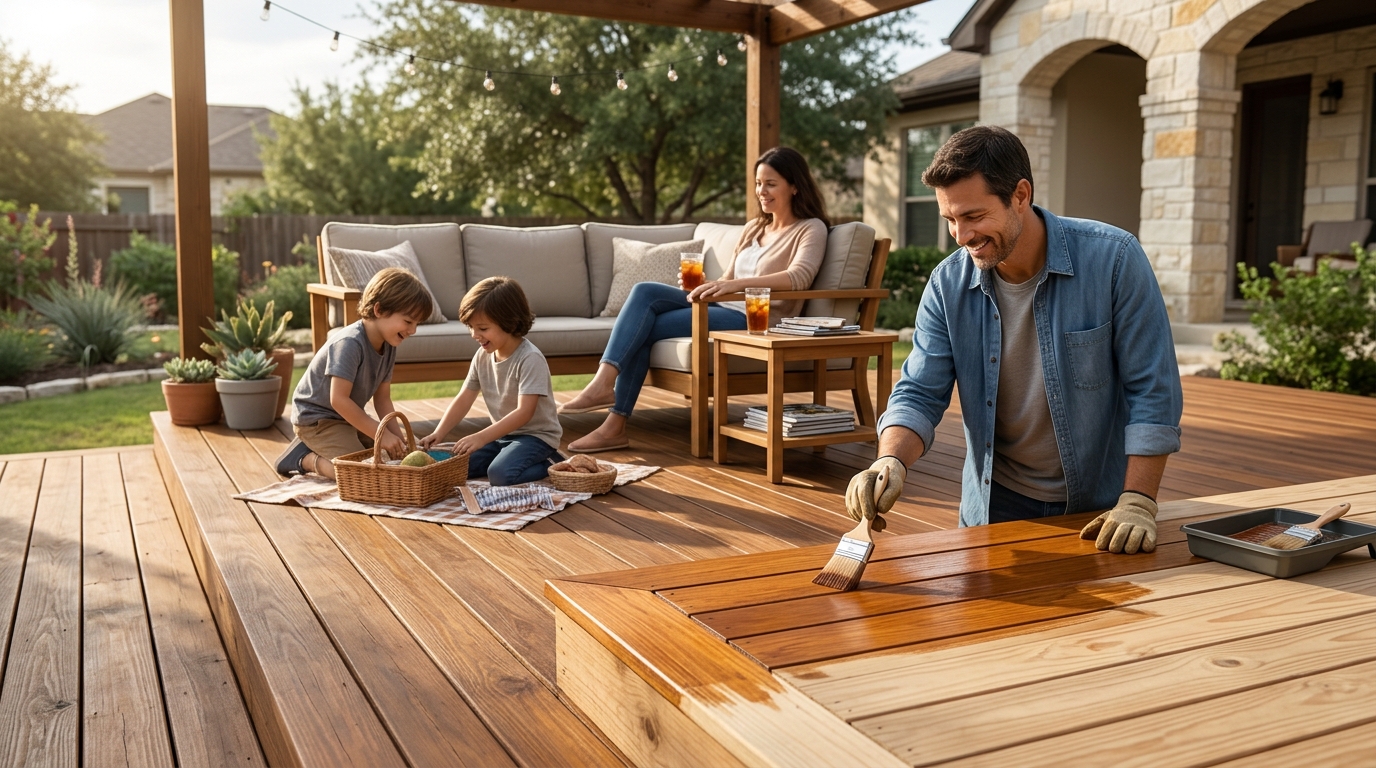
Choosing the right deck stain in San Antonio requires balancing UV protection, moisture resistance, and aesthetic preference. The intense Texas sun and humidity demand specialized products that outperform standard coatings. Texas Lonestar Painting helps homeowners select the best finish for their specific wood type and lifestyle needs.
1. Transparent Water-Based Stains
Best for homeowners who want to highlight natural wood grain with minimal color alteration. Transparent water-based stains allow the natural beauty of the wood to show through while providing a protective barrier. These options are environmentally friendly and dry quickly, reducing the time your deck is out of service. They are ideal for cedar or redwood decks where the natural color is already attractive.
2. Semi-Transparent Oil-Based Stains
Ideal for enhancing wood grain with a subtle tint and superior moisture penetration. Oil-based semi-transparent stains penetrate deep into the wood fibers, offering excellent protection against water absorption. They provide a richer color than transparent options while still allowing the grain pattern to remain visible. This is a popular choice for pressure-treated pine decks that need both color and protection.
3. Solid Color Water-Based Stains
Perfect for hiding imperfections and providing a uniform, paint-like appearance. Solid color stains offer the most coverage, effectively masking knots, gray spots, and previous stain colors. They function similarly to paint but remain more flexible, allowing the wood to expand and contract without cracking. This option is best for older decks that have suffered significant weathering.
4. Solid Color Oil-Based Stains

5. UV-Resistant Sealers
Essential for protecting wood from the intense San Antonio sun and preventing bleaching. UV-resistant sealers act like sunscreen for your deck, blocking harmful rays that cause wood to fade and crack. In San Antonio, where sunlight is intense year-round, this protection is critical for maintaining structural integrity. These sealers are often applied over existing stains to extend their lifespan.
6. Mold and Mildew Inhibiting Stains
Crucial for preventing biological growth in humid Central Texas climates. Humidity in San Antonio creates an environment where mold and mildew can thrive on wooden surfaces. Stains with built-in biocides prevent these organisms from taking hold, keeping your deck safe and clean. This is particularly important for decks in shaded areas or near landscaping that retains moisture.
7. Custom Color Blends
Allows for a unique aesthetic that matches your home's exterior palette. Professional applicators can mix custom colors to match your siding, trim, or landscape design. This option provides a cohesive look for your entire property, enhancing curb appeal. It is a premium choice for homeowners who want a tailored finish that reflects their personal style.
Choosing the Right Option
Select your stain based on your wood type, desired appearance, and local climate needs. For maximum protection in San Antonio, prioritize UV and moisture resistance. Contact Texas Lonestar Painting for a free consultation to determine the best fit for your deck.
Frequently Asked Questions
How often should I restain my deck in San Antonio?
Most decks in San Antonio require restaining every 2 to 3 years, depending on the product used and sun exposure. Regular inspections can help you determine when the protective layer is wearing thin.
Can I stain a deck that has never been stained before?
Yes, but the wood must be properly cleaned and sanded first. New wood may need to weather for a few weeks to ensure proper stain adhesion.
What is the difference between paint and stain for decks?
Paint sits on the surface and can peel, while stain penetrates the wood and flexes with it. Stain is generally more durable for outdoor wooden structures.
Do I need to pressure wash before staining?
Yes, professional pressure washing is essential to remove dirt, mildew, and old finish. This ensures the new stain bonds correctly to the wood.
Is oil-based or water-based stain better for Texas heat?
Both can work well, but oil-based stains often penetrate deeper, offering better moisture protection in humid climates. Water-based stains are easier to clean up and have lower VOCs.