

The best way to stain a deck in San Antonio is to use a premium, UV-resistant stain applied after thorough pressure washing and sanding. This method protects wood from the intense Texas sun and humidity, preventing warping and graying. Texas Lonestar Painting specializes in this precise process to ensure your outdoor space remains durable and visually appealing for years.
Understanding the San Antonio Climate Impact
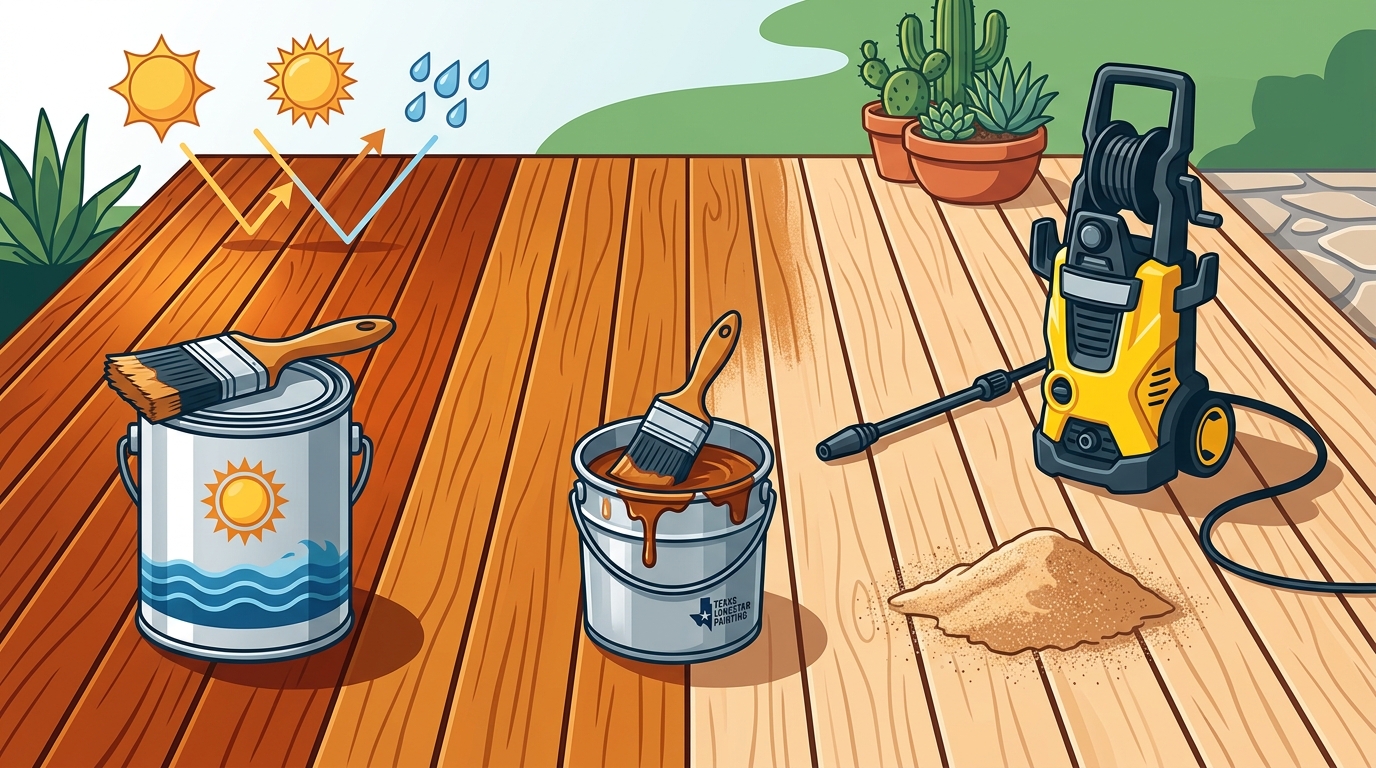
San Antonio weather is uniquely harsh on outdoor wood. The combination of intense UV radiation and high humidity creates a challenging environment for deck surfaces. Wood exposed to these conditions can bleach, crack, and warp within a single season if left unprotected. Understanding this local climate is the first step in choosing the right protection strategy.
UV rays break down the lignin in wood, causing it to turn gray and brittle. Meanwhile, humidity cycles cause the wood to expand and contract, leading to splintering and checking. A standard paint or low-quality sealer often fails under these specific stressors. You need a product that acts as a shield rather than just a cosmetic layer.
Deck stain is a penetrating finish that soaks into the wood fibers to provide protection from within. Unlike film-forming paints, stains do not sit on the surface where they can peel or flake. This penetration is critical for longevity in Central Texas. By choosing a stain over a paint, you allow the wood to breathe while still blocking moisture and UV damage.
The Critical Role of Surface Preparation
Preparation is the most important factor in a successful deck staining project. Applying stain over dirty, grayed, or moldy wood results in poor adhesion and a patchy finish. The wood must be clean, dry, and smooth to accept the stain evenly. Skipping this step is the most common reason for premature failure.
Professional-grade pressure washing is essential to remove years of built-up dirt, grime, and biological growth. Mold and mildew not only look unsightly but also degrade the wood structure over time. A thorough cleaning reveals the true condition of the wood and ensures the stain penetrates deeply. This step is non-negotiable for a long-lasting result.
After washing, the wood must be inspected for structural integrity. Loose boards, protruding nails, or signs of rot must be addressed before staining. Sanding smooths out rough spots and opens the wood grain for better absorption. Texas Lonestar Painting includes a detailed structural check and deep-clean restoration in every project to guarantee a flawless base.
Choosing the Right Stain Type
Semi-transparent stains are often the best choice for San Antonio homeowners. They provide a tinted color that enhances the wood grain while offering significant UV and moisture protection. This middle ground allows you to maintain a natural look without sacrificing durability. The color also helps mask minor imperfections in the wood.
When selecting a stain, look for products specifically formulated for high-UV environments. Premium sealants act like sunscreen for your deck, preventing the sun from bleaching the wood. These specialized coatings are designed to withstand the specific humidity and heat patterns of Texas. Choosing the right product ensures your investment lasts for multiple seasons.
Professional Application Techniques
Application technique determines the uniformity and durability of the finish. A common mistake is applying too much stain, which leads to a sticky, uneven surface. The goal is to saturate the wood without leaving excess product on the surface. Proper technique ensures a smooth, non-slip finish that is safe for families and pets.
Professional crews often use a combination of spraying and back-brushing. Spraying allows for quick, even coverage over large areas. Back-brushing works the stain into the wood grain, ensuring maximum penetration. This dual method eliminates streaks and ensures every fiber is protected. It is a technique that requires experience and attention to detail.
Timing is also crucial during application. The wood must be completely dry before staining begins. Applying stain to damp wood traps moisture inside, leading to peeling and bubbling. Professionals monitor weather conditions and wood moisture levels to ensure optimal application. This precision is what separates a good finish from a great one.
Long-Term Maintenance and Care
Even the best stain requires regular maintenance to look its best. Annual inspections help you identify areas that may need touch-ups. Look for signs of fading, peeling, or water beading on the surface. These indicators tell you when it is time to re-stain the deck.
Regular cleaning is part of long-term care. Sweeping the deck regularly removes debris that can trap moisture against the wood. Periodic gentle washing with a mild detergent keeps the surface clean and ready for future staining. This simple routine extends the life of your finish and keeps the deck looking fresh.
Re-staining is typically needed every two to three years, depending on the product and exposure. Unlike paint, which may need scraping and sanding, stain can often be applied over the previous coat after cleaning. This makes maintenance faster and less disruptive. Investing in professional maintenance ensures your deck remains a beautiful part of your home.
Key Takeaways
- San Antonio's intense sun and humidity require UV-resistant, penetrating stains for effective protection.
- Thorough pressure washing and sanding are essential for proper stain adhesion and longevity.
- Semi-transparent stains offer the best balance of natural wood appearance and protective durability.
- Professional application using spray and back-brushing techniques ensures a uniform, non-slip finish.
- Regular cleaning and annual inspections help maintain the deck's appearance and structural integrity.
- Re-staining every two to three years is a manageable maintenance schedule for most Texas decks.
Frequently Asked Questions
How often should I re-stain my deck in San Antonio?
Most decks in San Antonio require re-staining every two to three years. The frequency depends on the type of stain used and the amount of sun exposure. Regular inspections will help you determine when the finish needs refreshing.
Can I stain a deck that is already painted?
Staining over paint is generally not recommended. Paint creates a barrier that prevents stain from penetrating the wood. You would need to strip the paint first, which is a labor-intensive process. It is usually better to choose a paint system if you already have painted wood.
What is the best time of year to stain a deck in Texas?
Spring and fall are the ideal times for deck staining in Texas. Temperatures are mild, and humidity levels are more manageable. Avoid staining during the peak of summer heat or during rainy periods to ensure proper drying and adhesion.
Do I need to sand the deck before staining?
Yes, sanding is crucial for a smooth finish. It removes splinters and opens the wood grain for better stain absorption. Light sanding is usually sufficient for maintenance staining, while deeper sanding may be needed for initial projects.
What happens if I don't stain my deck?
Unstained wood in San Antonio will quickly turn gray and become brittle. The UV rays break down the wood fibers, leading to cracking and splintering. Over time, this degradation can compromise the structural integrity of the deck.
Conclusion
Achieving a beautiful and durable deck in San Antonio requires more than just buying a can of stain. It demands a strategic approach to preparation, product selection, and application. By understanding the local climate and using professional techniques, you can protect your investment for years to come. Texas Lonestar Painting brings this expertise to every project, ensuring your outdoor space remains a highlight of your home. To get started, schedule a consultation with our team today.