
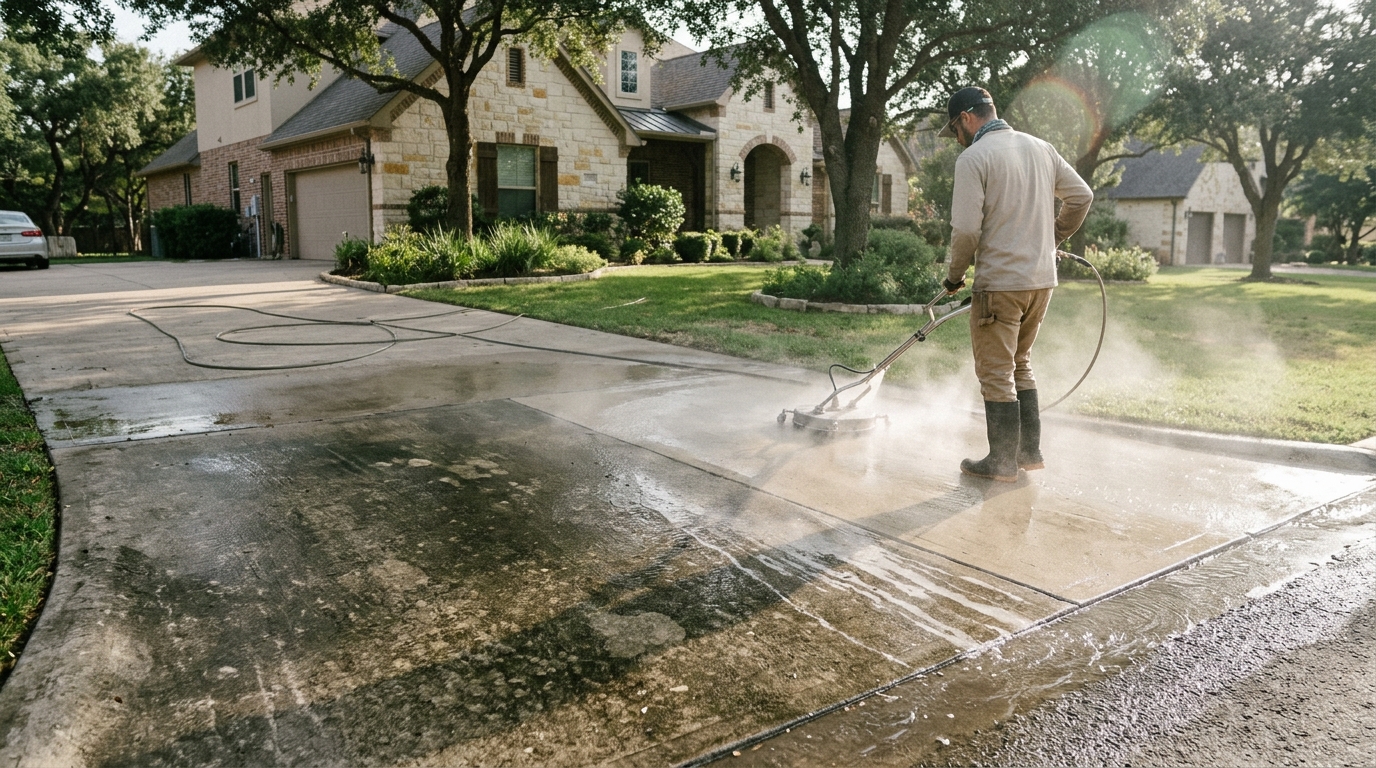
Choosing the right driveway cleaning method depends on the severity of the stain and the condition of your concrete. High-pressure washing is the most effective method for removing deep grime and mold, while chemical degreasers work best for oil spots. Texas Lonestar Painting provides professional pressure washing services in San Antonio that safely restore concrete surfaces without causing damage.
High-Pressure Washing vs. Low-Pressure Washing
High-pressure washing is a cleaning technique that uses water at pressures exceeding 1,500 PSI to blast away dirt, algae, and mildew. This method is highly effective for concrete driveways because the material is dense and can withstand significant force. Low-pressure washing, often called soft washing, uses lower pressure and relies on chemical solutions to break down organic growth. While soft washing is safer for delicate surfaces like stucco or wood, it is often too gentle for the thick layers of grime that accumulate on concrete in the Texas climate.
For concrete, the implication is clear: high-pressure washing is generally the superior choice for overall cleaning. It removes the physical layer of dirt that chemicals alone cannot lift. However, the pressure must be calibrated correctly. Using a pressure that is too high can etch the surface, while too low a pressure leaves the driveway looking dull. Professional crews adjust the nozzle and pressure settings based on the age and texture of the concrete to ensure a thorough clean without structural harm.
Chemical Degreasing for Oil and Grease
Chemical degreasing is a process that uses specialized solvents to break down petroleum-based stains like motor oil and transmission fluid. Concrete is porous, meaning oil can seep deep into the material within hours of a spill. Standard water pressure alone cannot remove these deep-set stains because the oil bonds with the pores of the concrete. A degreaser penetrates the surface, emulsifies the oil, and allows it to be rinsed away.
The evidence for using chemicals is strongest when dealing with automotive stains. Homeowners often find that pressure washing alone leaves a dark halo around an oil spot. By applying a degreaser first, you allow the solvent to work for a specific dwell time before rinsing. This two-step approach ensures that the stain is lifted from the pores rather than just pushed to the sides. It is critical to use a degreaser that is safe for the specific type of concrete sealant you have, if any, to avoid damaging the protective layer.
Acid Washing and Its Risks
Acid washing is a method that uses muriatic acid or phosphoric acid to etch the surface of the concrete and remove mineral deposits. This technique was historically used to clean concrete before painting or sealing. However, it is widely considered dangerous for modern driveway maintenance. The acid reacts with the calcium in the concrete, which can weaken the surface and create a rough, pitted texture. It also poses a significant safety risk to the applicator and surrounding landscaping.
The implication for homeowners is that acid washing should be avoided for routine cleaning. The long-term damage to the concrete structure often outweighs the short-term cleaning benefit. Modern cleaning methods, such as high-pressure washing and chemical degreasing, achieve better results without the corrosive risks. If your driveway has heavy mineral staining from hard water, a professional assessment is necessary to determine if a safe, controlled cleaning method can address the issue without etching the surface.
DIY vs. Professional Service
DIY cleaning is a do-it-yourself approach where homeowners rent equipment and apply their own cleaning solutions. This method offers cost savings but comes with significant risks. Rental pressure washers often lack the power or control needed for safe concrete cleaning. Improper use can lead to surface damage, water intrusion into the foundation, or injury. Professional service, on the other hand, involves trained technicians who use commercial-grade equipment and know how to handle different surface conditions.
For most San Antonio homeowners, the professional route is the safer and more effective option. Texas Lonestar Painting offers pressure washing services that include a thorough assessment of the surface before cleaning begins. This ensures that the method used is appropriate for your specific driveway. The cost of professional service is often justified by the quality of the finish and the avoidance of costly repairs caused by DIY mistakes. A clean driveway is not just about aesthetics; it is about protecting your home's investment.
Choosing the Best Method for Your Concrete
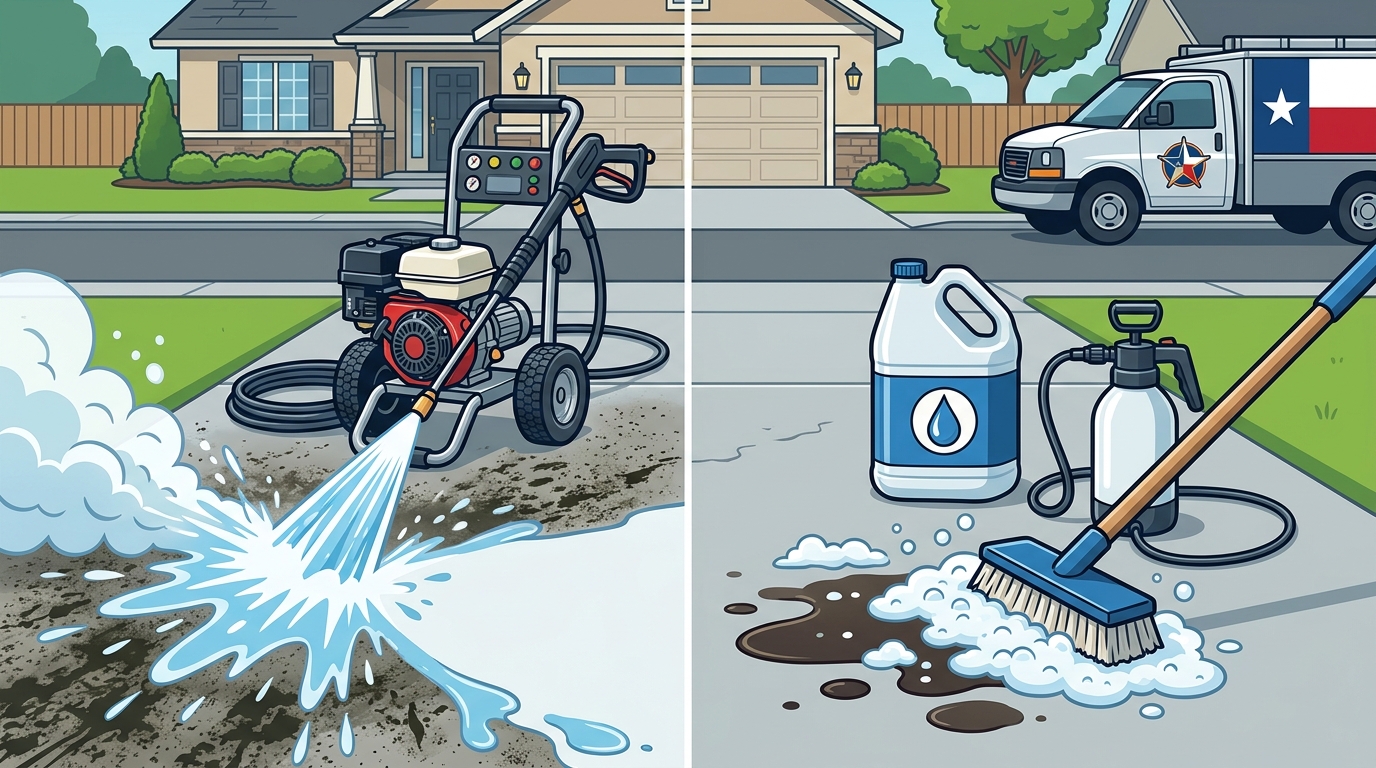
Selecting the best cleaning method requires evaluating the type of stain, the age of the concrete, and the desired outcome. For general dirt and grime, high-pressure washing is the standard. For oil stains, a combination of chemical degreasing and pressure washing is required. For delicate or older concrete, a softer approach with careful chemical application may be necessary. The goal is to restore the surface without compromising its integrity.
When in doubt, a professional consultation is the best first step. Texas Lonestar Painting can assess your driveway and recommend the most effective cleaning strategy. Whether you need a simple wash or a complex stain removal, the right method will make a significant difference in the appearance and longevity of your concrete. A well-maintained driveway enhances curb appeal and protects your home from the elements. By choosing the correct cleaning method, you ensure that your investment lasts for years to come.
Key Takeaways
- High-pressure washing is the most effective method for removing general dirt and grime from concrete driveways.
- Chemical degreasing is essential for removing deep-set oil and grease stains that water alone cannot lift.
- Acid washing is generally discouraged due to the risk of surface damage and safety hazards.
- DIY cleaning carries risks of surface damage and injury, making professional service a safer option.
- Professional assessment ensures that the cleaning method is appropriate for the specific condition of your concrete.
- Regular cleaning extends the life of your driveway and enhances your home's curb appeal.
Frequently Asked Questions
What is the best pressure setting for washing a concrete driveway?
The ideal pressure for concrete is typically between 2,500 and 3,000 PSI. This range is strong enough to remove dirt and grime without etching the surface. Always start with a lower pressure and increase it only if necessary. Using a fan tip nozzle helps distribute the force evenly and reduces the risk of damage.
Can I use a degreaser on a sealed concrete driveway?
Yes, but you must choose a degreaser that is compatible with your specific sealant. Some harsh chemicals can strip or damage the sealant, leaving the concrete unprotected. It is best to test the degreaser in a small, inconspicuous area first. If the sealant is damaged, you will need to reapply it after cleaning.
How often should I pressure wash my driveway?
It is recommended to pressure wash your driveway once a year. This frequency is sufficient to remove the buildup of dirt, pollen, and mildew that occurs in the Texas climate. If you have heavy traffic or frequent oil spills, you may need to clean it more often. Regular cleaning prevents stains from setting permanently.
Is pressure washing safe for all types of concrete?
Pressure washing is safe for most modern concrete driveways, but it requires caution. Older or cracked concrete may be more susceptible to damage. If your driveway has significant cracks or spalling, it is best to have it repaired before pressure washing. A professional can assess the condition of your concrete and recommend the safest cleaning method.
What should I do if I spill oil on my driveway?
Act quickly to prevent the oil from seeping deep into the concrete. Cover the spill with cat litter or sawdust to absorb the oil. Once the oil is absorbed, sweep it up and dispose of it properly. Then, apply a degreaser to the area and let it dwell for the recommended time before rinsing with a pressure washer. Learn more: Free Painting Quote San.