
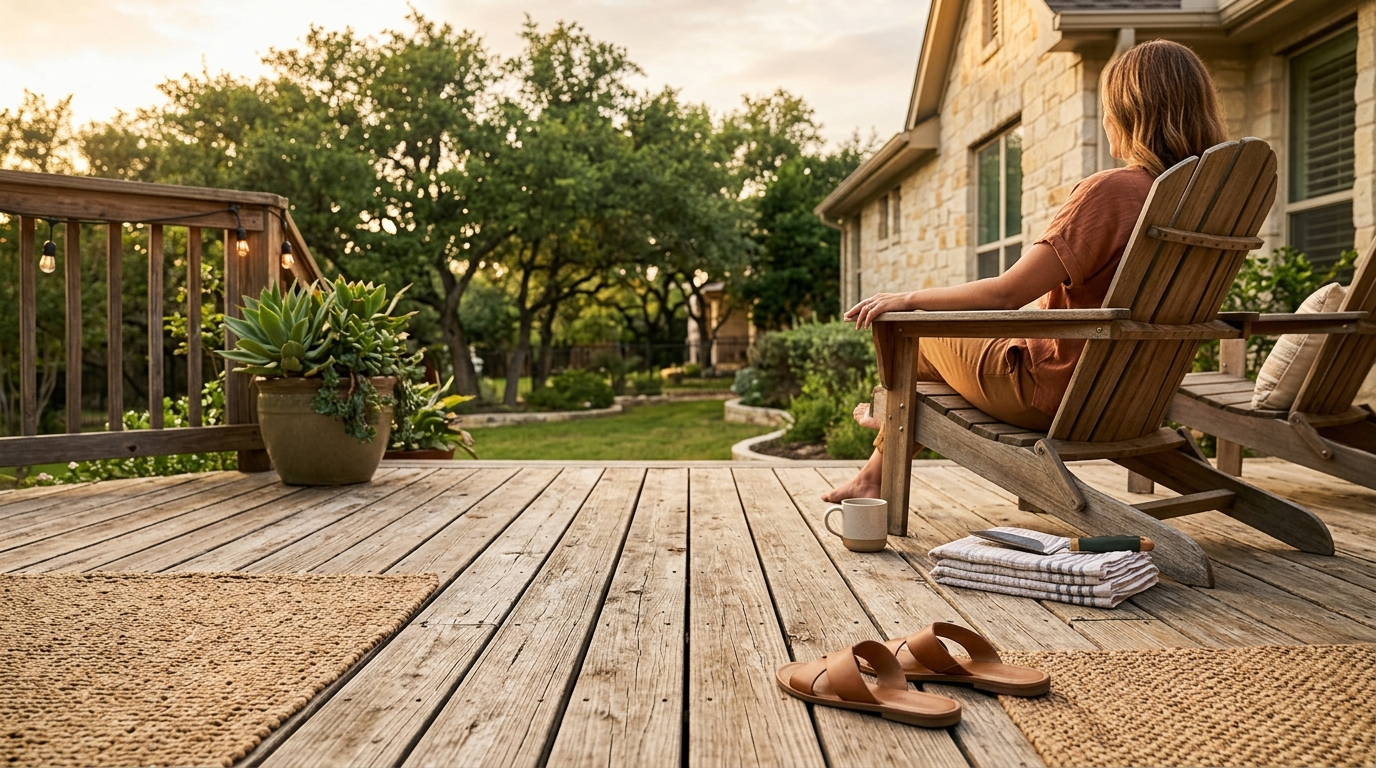
San Antonio’s intense climate subjects outdoor wood to relentless UV radiation and seasonal humidity swings that accelerate wood degradation. According to the EPA, prolonged exposure to ultraviolet rays breaks down lignin, the structural binder in wood fibers, leading to rapid graying and surface erosion. Homeowners in the Alamo City often overlook early warning signs until structural integrity is compromised, resulting in costly repairs that exceed the price of routine maintenance. Recognizing these physical indicators early allows you to protect your investment and maintain the aesthetic value of your outdoor living space. (Painting amp Home Improvement)
Visual Deterioration and Color Fading
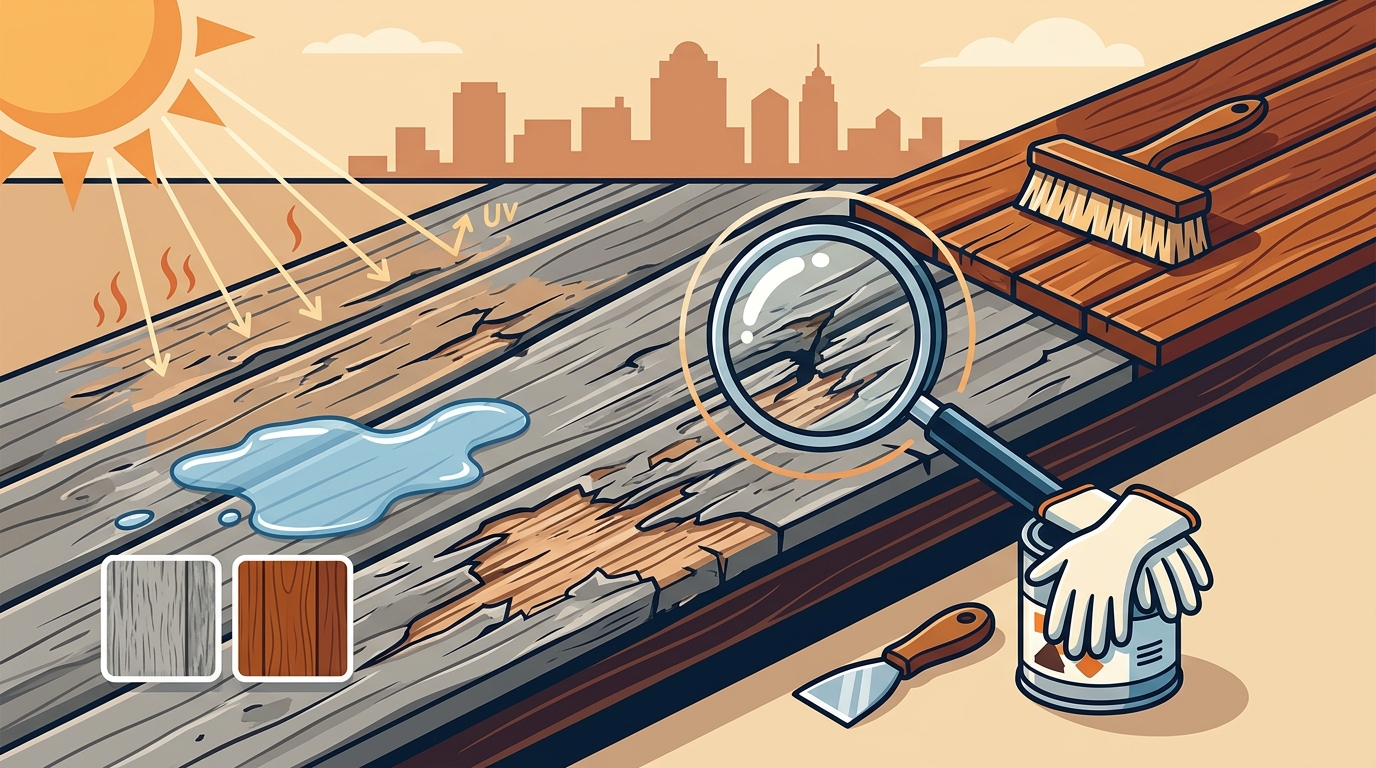
The most immediate indicator that your deck requires attention is a noticeable shift in color intensity. Fresh stain penetrates the wood grain, enhancing the natural texture and providing a rich, uniform appearance. Over time, the pigments in the stain break down due to solar exposure, causing the wood to turn a dull gray or silver tone. This graying is not merely cosmetic; it signals that the protective barrier has failed to shield the wood from moisture and UV damage. (Painting amp Home Improvement)
When the color becomes patchy or uneven, it indicates that the stain is wearing off at different rates across the deck surface. Areas with heavy foot traffic or those exposed to direct sunlight will degrade faster than shaded sections. If your deck looks dry, brittle, or lacks its original luster, it is time to consider restaining. According to woodworking experts, regular maintenance of wood finishes is critical to preventing irreversible surface damage.
The Water Bead Test and Absorption
One of the most reliable diagnostic tools for homeowners is the simple water bead test. This method determines whether your deck’s current finish is still repelling moisture effectively. To perform this test, sprinkle a small amount of water onto several different areas of your deck, including shaded spots and sun-exposed planks.
If the water beads up on the surface, your deck is still adequately sealed. However, if the water soaks into the wood within a few minutes, leaving a dark, wet spot, the protective layer has failed. Wood that absorbs water is highly susceptible to swelling, warping, and rotting. In San Antonio’s humid climate, this absorption cycle accelerates the breakdown of wood fibers. According to Architectural Digest, preventing water intrusion is the single most important factor in extending the lifespan of a wooden deck.
Surface Texture and Splintering
As the protective stain wears away, the wood becomes vulnerable to the elements, leading to changes in surface texture. You may notice the wood feeling rough or splintery to the touch. This splintering occurs when the wood fibers dry out and separate from the main plank. Walking barefoot on a splintered deck is not only uncomfortable but also dangerous, posing a risk of injury to your family and guests.
Another sign of surface degradation is the presence of small cracks or checks in the wood. These cracks allow moisture to penetrate deep into the plank, leading to internal rot that is not visible from the surface. If you see significant cracking or splintering, the deck needs professional preparation and restaining to restore safety and smoothness. According to This Old House, addressing surface texture issues early prevents the need for extensive board replacement later.
Mold, Mildew, and Algae Presence
San Antonio’s seasonal humidity creates an ideal environment for biological growth on wooden surfaces. If you notice black, green, or gray spots on your deck, you are likely dealing with mold, mildew, or algae. These organisms thrive in damp, shaded areas and can cause the wood to rot from the inside out. While surface cleaning can remove visible growth, it does not address the underlying issue of moisture retention.
Biological growth indicates that the wood is staying wet for too long, which breaks down the lignin and cellulose structures. If your deck has a musty odor or slippery patches, it is a clear sign that the finish has failed to protect the wood. Professional power washing and restaining can eliminate these organisms and apply a stain with mildewcides to prevent future growth. According to Energy Star, maintaining exterior wood surfaces contributes to the overall durability and health of a home’s envelope.
The Restoration Process Explained
Restoring a deck is a multi-step process that requires professional expertise to ensure longevity. The first step is thorough cleaning to remove dirt, mildew, and old, peeling stain. This is often followed by power washing to open the wood grain. Once the wood is dry, any rotten boards are replaced, and the surface is sanded to create a smooth base for the new stain.
The final step is the application of a high-quality, weather-resistant stain. At Texas Lonestar Painting, we use premium products designed to withstand the specific climate challenges of the San Antonio area. Our process ensures that the stain penetrates deeply, providing long-lasting protection against UV rays and moisture. Our Deck & Fence Staining services are tailored to preserve the beauty and integrity of your outdoor spaces.
Deck Maintenance vs. Replacement
Many homeowners face the dilemma of whether to restain or replace their deck entirely. The following table outlines the key differences to help you make an informed decision.
| Factor | Restaining | Replacement |
|---|---|---|
| Cost | Low to Moderate | High |
| Timeframe | 1-3 Days | 1-2 Weeks |
| Structural Integrity | Requires Sound Wood | Restores Full Integrity |
| Aesthetic Impact | Refreshes Color | Complete Design Change |
| Environmental Impact | Low Waste | High Waste |
Key Takeaways
- Color Fading: Gray, patchy wood indicates UV damage and failed protection.
- Water Absorption: If water soaks in rather than beading, the seal is broken.
- Splintering: Rough textures signal dry, degrading wood fibers that need sanding.
- Biological Growth: Mold and mildew thrive in damp wood, indicating moisture retention issues.
- Professional Prep: Proper cleaning and sanding are critical for stain adhesion and longevity.
- Climate Specificity: San Antonio’s heat and humidity demand high-durability coatings.
- Cost Efficiency: Restaining is significantly more affordable than full deck replacement.
Frequently Asked Questions
How often should I restain my deck in San Antonio?
In San Antonio’s harsh climate, it is generally recommended to restain your deck every two to three years. However, this frequency depends on the type of stain used and the amount of sun exposure your deck receives. High-quality semi-transparent stains may last longer than solid colors, which sit on the surface and wear faster.
Can I restain my deck if it is already gray?
Yes, you can restain a gray deck, but it requires thorough preparation. The gray color indicates that the wood fibers have been damaged by UV rays. You must clean and sand the deck to remove the damaged surface layer before applying a new stain. This process ensures that the new stain adheres properly and provides effective protection.
What is the difference between staining and sealing a deck?
Deck sealers are primarily designed to repel water and prevent moisture damage, while deck stains add color and provide UV protection. Many modern products combine both functions, offering a stain with built-in sealers. For San Antonio homeowners, a stain with UV inhibitors is crucial to prevent the wood from graying and cracking.
How do I know if my deck boards are rotten?
Signs of rot include soft spots, discoloration, and a spongy feel when you walk on the deck. If you can easily push a screwdriver into the wood, it is likely rotten and needs replacement. Rotting boards compromise the structural integrity of the deck and cannot be fixed by staining alone.
Is it better to stain or paint a deck?
Staining is generally recommended for decks because it penetrates the wood, allowing it to breathe and reducing the risk of peeling. Paint forms a thick film on the surface that can trap moisture and peel over time, especially in fluctuating temperatures. Stain highlights the natural wood grain while providing protection.
What causes mold to grow on my deck?
Mold grows on decks due to a combination of moisture, organic material, and shade. In San Antonio, humidity and occasional heavy rains provide the moisture needed for mold spores to thrive. Poor air circulation and debris accumulation on the deck surface also contribute to mold growth. Regular cleaning and staining with mildewcides can prevent this.
How long does the deck staining process take?
The deck staining process typically takes one to three days, depending on the size of the deck and the weather conditions. The first day is usually dedicated to cleaning, sanding, and repairing any damaged boards. The second day is for applying the stain, and the third day allows for drying time before the deck can be used. Schedule a consultation to get a precise timeline for your project.
Schedule Your Deck Staining Consultation
Don’t wait until your deck is damaged beyond repair. Recognizing the signs early and taking action can save you thousands of dollars in replacement costs. Texas Lonestar Painting offers expert deck staining services tailored to the unique needs of San Antonio homeowners. Our team uses premium, weather-resistant products to ensure your deck looks beautiful and lasts for years. Contact us today to schedule your free estimate and protect your outdoor living space.