

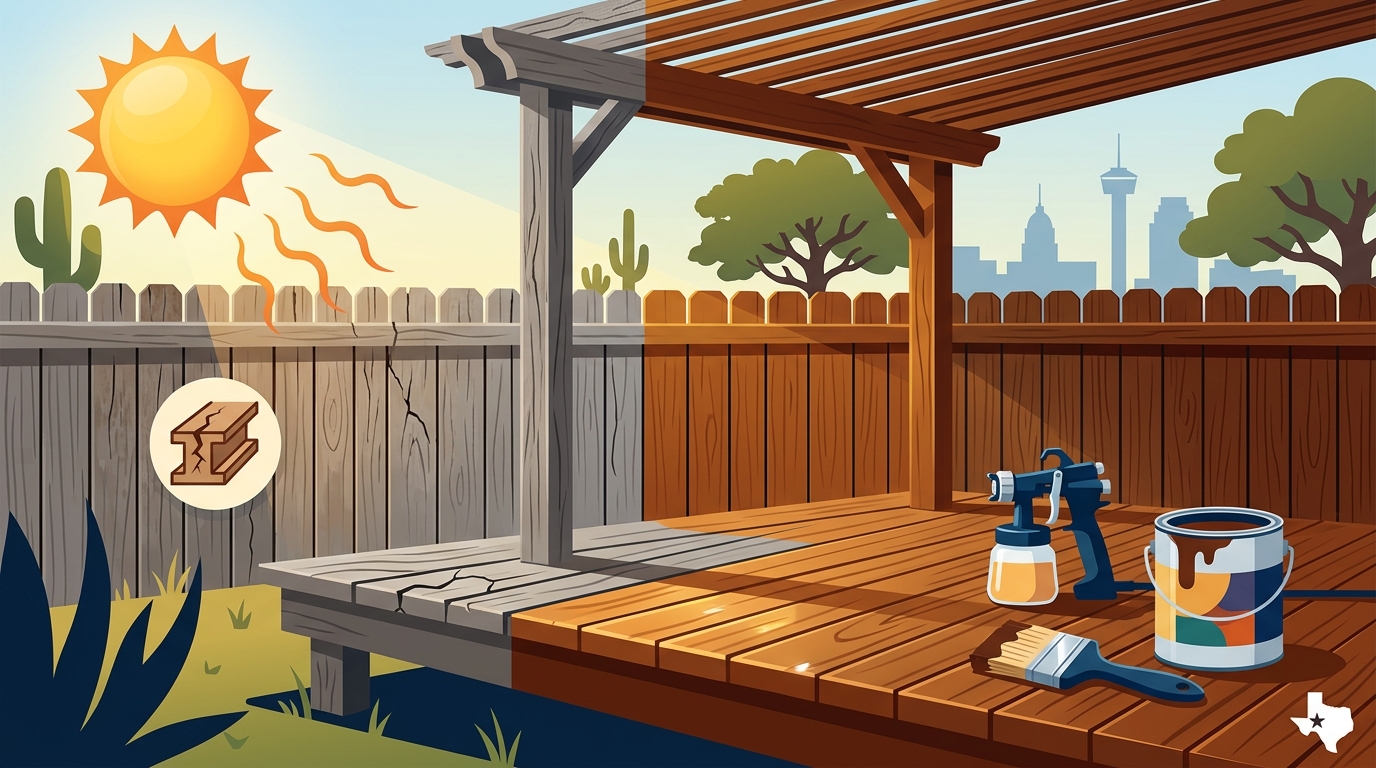
Homeowners in the Alamo City face a unique challenge when it comes to outdoor wood preservation. The intense Texas sun, combined with sudden humidity spikes, accelerates the degradation of untreated or poorly maintained wood. According to industry data, wood structures exposed to direct UV radiation can lose up to 30% of their structural integrity within the first five years without proper protective coatings. This makes professional staining not just an aesthetic choice, but a critical maintenance requirement for property value. (Painting amp Home Improvement)
Why Staining Matters in San Antonio
San Antonio's climate is defined by hot summers and occasional heavy rainfall. This environment creates a perfect storm for wood rot, mold, and UV damage. Deck staining is the process of applying a penetrating oil-based or water-based finish that seals the wood pores against moisture while blocking harmful ultraviolet rays. Without this barrier, the natural oils in cedar, redwood, or pressure-treated pine evaporate, leading to gray, brittle wood that splinters easily. (Painting amp Home Improvement)
Many homeowners attempt to DIY this process, but the margin for error is slim. Improper application can lead to peeling, which is far more difficult to remove than the original stain. Professional crews understand the specific humidity levels required for proper curing in Central Texas. They know when to wait for a dry window and how to prep surfaces to ensure the stain bonds correctly. This expertise is why local experts recommend professional assessment before any application begins. (Exterior Painting Services Texas)
Deck Staining: Protecting Your Investment
Your deck is likely the most used outdoor space in your home. It endures foot traffic, furniture weight, and constant exposure to the elements. Pressure washing is often the first step in the restoration process, removing years of accumulated dirt, mildew, and old finish residue. This step is critical because stain cannot adhere to a dirty surface.
Once the wood is clean and dry, the staining process begins. Professionals select stains based on the wood type. For pressure-treated pine, which is common in San Antonio builds, a semi-transparent stain is often recommended to allow the wood grain to show while providing protection. For cedar or redwood, a solid or semi-transparent stain can enhance the natural warmth of the wood.
The longevity of a stained deck typically ranges from three to five years, depending on the quality of the product and the amount of sun exposure. Regular maintenance, including annual inspections and spot cleaning, can extend this timeline. Texas Lonestar Painting provides detailed estimates that break down these prep and application costs, ensuring transparency for the homeowner.
Fence Staining: Security and Aesthetics
A fence serves a dual purpose: it defines your property line and provides privacy. However, wooden fences are highly susceptible to warping and rotting at the base, where they contact the soil. Staining helps mitigate this by creating a hydrophobic barrier that repels water. Deck and fence staining are often bundled services because the prep work and material requirements are similar.
When staining a fence, the direction of the grain and the type of wood are key factors. Cedar fences, for example, are prized for their natural resistance to insects but still require UV protection to prevent graying. Pressure-treated wood, while resistant to rot, can still crack and split if left untreated. A professional stain penetrates deep into the wood fibers, reinforcing them against the physical stress of wind and temperature changes.
Many homeowners in San Antonio choose to stain their fences in darker tones to hide dirt and reduce the visual impact of fading. However, lighter tones are also popular for creating a brighter, more open feel in smaller yards. The choice ultimately depends on the architectural style of the home and the personal preference of the owner.
Pergola Staining: Structural Longevity
Pergolas add architectural interest and define outdoor living areas. They are often constructed from heavy timber beams that are expensive to replace. Staining a pergola is not just about looks; it is about preserving a significant structural investment. The horizontal beams of a pergola receive direct overhead sun, making them the most vulnerable to UV damage.
Proper staining of a pergola requires careful masking of surrounding plants and hardscaping. Overspray can damage landscaping and concrete patios, which is why professional crews use drop cloths and masking tape extensively. The application process involves multiple coats to ensure even coverage, especially in the crevices and joints of the timber.
Regular staining of pergolas also prevents the growth of algae and moss, which can make the structure slippery and unsafe. By maintaining the wood's integrity, homeowners can enjoy their pergola for decades without worrying about premature decay. This long-term value is a key reason why professional staining is preferred over DIY alternatives.
How to Choose a Staining Professional
Not all painting contractors offer high-quality staining services. It is important to verify that the company has specific experience with exterior wood preservation. Look for providers who use high-grade, weather-resistant paints and stains designed for the Texas climate. They should also offer a warranty on their work, which signals confidence in their preparation and application methods.
Transparency in pricing is another critical factor. A reputable contractor will provide a detailed quote that includes surface prep, materials, labor, and cleanup. They should also explain the difference between various stain types and recommend the best option for your specific wood type and exposure.
Customer reviews and past project portfolios are excellent indicators of quality. Companies with a long history in the community, such as those with over 15 years of experience, have likely weathered various climate challenges and refined their processes accordingly. Check for consistent 5.0 ratings on Google Reviews to gauge customer satisfaction.
Comparison of Staining Options
| Stain Type | Best For | Longevity | Visibility of Wood Grain |
|---|---|---|---|
| Solid Stain | Older wood, maximum UV protection | 5-7 years | Low (opaque) |
| Semi-Transparent Stain | Newer wood, natural look | 3-5 years | High |
| Clear Sealant | Minimal color change, water protection | 1-3 years | Very High |
Key Takeaways
- Climate Impact: San Antonio's intense sun and humidity require specialized weather-resistant coatings to prevent rapid wood degradation.
- Prep is Critical: Professional power washing and surface prep are non-negotiable steps for stain adhesion and longevity.
- Material Selection: The choice between solid, semi-transparent, and clear stains depends on the wood type and desired aesthetic.
- Long-Term Value: Regular staining extends the life of decks and fences by 3-5 years per application, protecting your investment.
- Expertise Matters: Companies with 15+ years of experience and high customer satisfaction rates offer more reliable outcomes.
- Transparent Pricing: Detailed quotes prevent hidden costs and ensure you understand the scope of prep and labor.
- Local Knowledge: Local contractors understand the specific curing times and weather windows required for Central Texas.
Frequently Asked Questions
How often should I stain my deck in San Antonio?
Most experts recommend staining your deck every three to five years. However, this depends on the type of stain used and the amount of sun exposure your deck receives. Semi-transparent stains may need more frequent reapplication than solid stains.
Can I stain my fence in the winter?
It is generally best to avoid staining in the winter due to lower temperatures and higher humidity, which can prevent proper curing. The ideal time for staining in San Antonio is during the spring or fall when temperatures are mild and dry.
What is the difference between staining and painting a deck?
Painting creates a thick film on the surface of the wood that can peel and crack over time. Staining penetrates the wood fibers, allowing the wood to breathe while providing protection. Staining is generally more durable for outdoor decks than painting.
Do you offer pressure washing before staining?
Yes, professional pressure washing is a standard part of the staining process. It removes dirt, mildew, and old finish residue, ensuring that the new stain adheres properly to the wood surface.
How long does it take to stain a fence?
The timeline varies based on the size of the fence and the condition of the wood. A typical residential fence project can take one to two days for prep and application, plus additional time for drying between coats.
Is it worth hiring a professional for pergola staining?
Yes, pergolas are difficult to access and require careful masking to protect plants and hardscaping. Professionals have the equipment and expertise to ensure even coverage and proper adhesion, which DIY efforts often miss.
What type of stain is best for cedar fences?
Semi-transparent stains are often recommended for cedar fences as they enhance the natural beauty of the wood while providing UV protection. Solid stains can also be used if you prefer a more uniform color.
Schedule Your Consultation
Protect your home's exterior with professional deck, fence, and pergola staining services. Texas Lonestar Painting offers transparent estimates and high-quality, weather-resistant coatings tailored to the San Antonio climate. Schedule a consultation today to get a free quote and transform your outdoor spaces.