
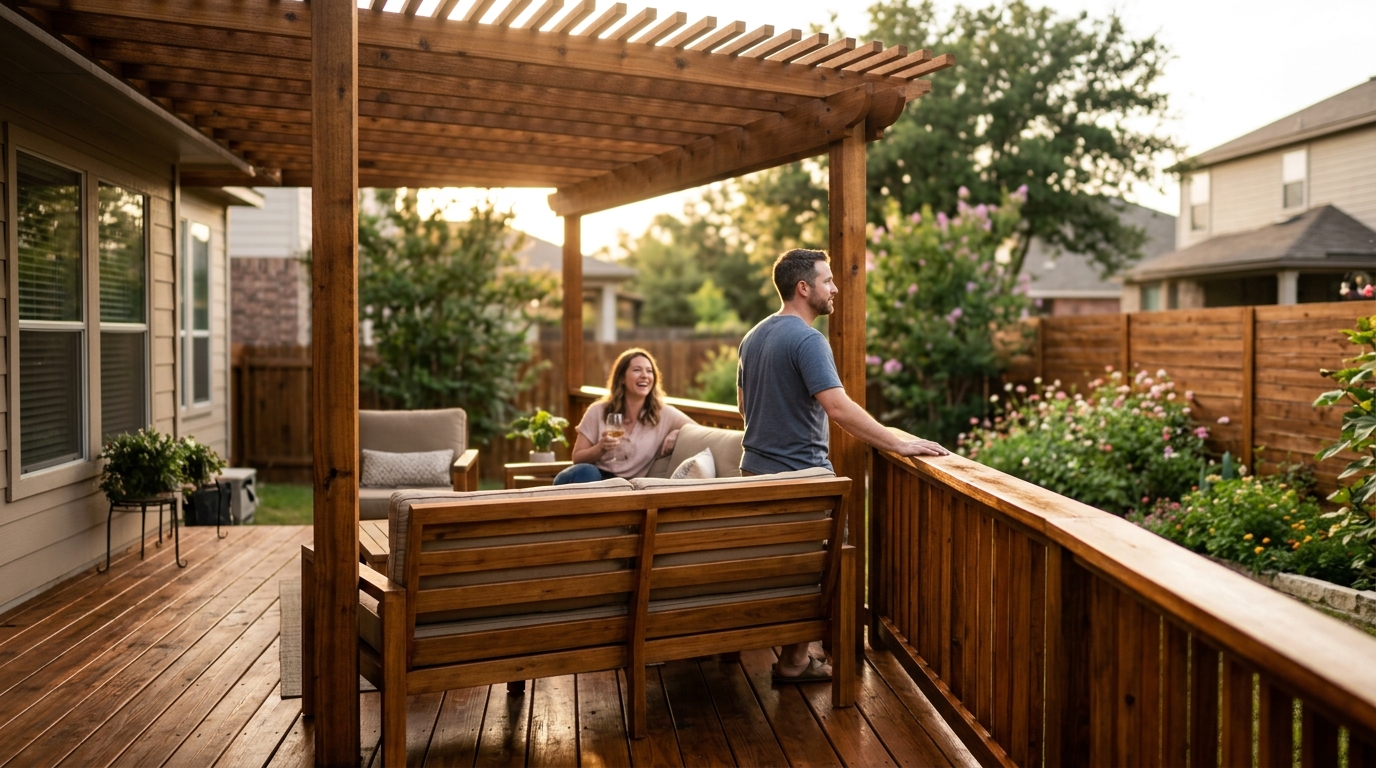
Homeowners across the Alamo City consistently prioritize outdoor wood preservation to maintain property value and curb appeal. Local contractors report that properly treated timber structures require specialized coating systems to resist seasonal humidity and intense ultraviolet exposure. Selecting a qualified staining professional ensures long-term structural integrity and prevents costly wood rot. This guide examines the specific service providers, application methods, and maintenance schedules that define professional outdoor wood care in the region.
Wood Protection Basics
Outdoor timber structures face continuous environmental stress. Wood staining is a specialized finishing process that penetrates timber fibers to block moisture absorption while enhancing natural grain patterns. San Antonio contractors utilize advanced pigment formulations to combat rapid sun degradation. Homeowners benefit from reduced warping, cracking, and insect infestation when professional coatings are applied correctly.
Regional climate conditions demand specific product selections. Contractors evaluate wood species, exposure levels, and structural load requirements before recommending a finish. Transparent stains preserve natural aesthetics while semi-transparent and solid options provide heavier UV shielding. Proper surface cleaning remains the foundational step for lasting adhesion.
Staining Versus Sealing
Many property owners confuse protective sealants with decorative stains. Wood sealing is a clear protective barrier designed to repel water without altering the natural color of timber. Staining products contain pigments that actively block ultraviolet radiation and prevent fiber breakdown. Selecting the correct product depends on aesthetic preferences and structural exposure levels.
Professional painters assess each project to determine the optimal coating system. Deck surfaces require heavy-duty formulations that withstand foot traffic and furniture placement. Fence boards benefit from flexible binders that expand and contract with temperature fluctuations. Pergola beams demand specialized UV-resistant binders to prevent premature graying.
Contractor Selection
Finding a qualified staining professional requires verifying local experience and equipment standards. Deck staining services demand specialized pressure washing equipment and professional-grade surface preparation. Reputable companies provide detailed project scopes that outline cleaning, sanding, priming, and coating steps. Clients should verify insurance coverage and request recent portfolio examples.
Local service providers typically maintain active portfolios showcasing completed residential and commercial projects. Exterior painting services often complement staining work by addressing adjacent structural elements like trim and siding. Homeowners should prioritize contractors who offer comprehensive warranty coverage and transparent pricing structures. Reading verified customer reviews provides additional insight into workmanship quality and scheduling reliability.
Application Process
Professional coating application follows a strict chronological sequence to ensure maximum durability. Cabinet painting refreshing techniques translate directly to outdoor wood treatment through meticulous surface preparation. Technicians remove loose debris, power wash surfaces, and allow complete drying before applying protective binders. Multiple thin coats outperform single heavy applications by preventing peeling and blistering.
Weather conditions dictate optimal application windows. Contractors monitor humidity levels and forecasted rainfall to prevent premature curing failures. Proper ventilation and temperature control accelerate drying times without compromising finish quality. Final inspections verify even coverage, proper edge sealing, and complete cleanup of surrounding landscaping.
Maintenance Schedule
Long-term wood preservation requires consistent inspection and periodic reapplication. About our team guidelines emphasize proactive maintenance to extend coating lifespan and preserve structural integrity. Homeowners should schedule annual visual inspections to identify early signs of wear, peeling, or moisture intrusion. Addressing minor defects promptly prevents extensive timber damage and reduces long-term restoration costs.
Regular cleaning prevents dirt accumulation and biological growth that compromise protective coatings. Soft brushing and mild detergent solutions safely remove surface contaminants without damaging finished surfaces. Reapplying a fresh topcoat every three to five years maintains optimal UV protection and moisture resistance. Consistent upkeep preserves property value and eliminates the need for premature timber replacement.
Service Comparison Overview
| Wood Structure Type | Recommended Finish | Expected Lifespan | Service Link |
|---|---|---|---|
| Composite or Pressure-Treated Decks | Semi-Transparent Penetrating Oil | Three to Five Years | Deck Staining |
| Vertical Privacy Fences | Solid Pigmented Coating | Five to Seven Years | Fence Staining |
| Open-Air Pergola Beams | UV-Resistant Transparent Sealant | Two to Four Years | Pergola Staining |
Key Takeaways
- Professional staining prevents moisture intrusion and ultraviolet fiber degradation.
- Transparent finishes preserve natural grain while solid options block maximum sunlight.
- Surface preparation accounts for sixty percent of long-term coating success.
- Local contractors utilize climate-specific binders designed for regional humidity cycles.
- Annual inspections identify early wear patterns before structural damage occurs.
- Reapplication intervals range from two to seven years based on exposure levels.
- Verified customer reviews and warranty coverage indicate reliable workmanship standards.
Frequently Asked Questions
How often should outdoor wood structures receive professional staining?
Most qualified contractors recommend inspecting stained surfaces annually and reapplying protective coatings every three to five years. High-exposure areas may require more frequent maintenance to prevent premature weathering.
Can I apply wood stain myself or should I hire a professional?
DIY applications often result in uneven coverage and premature peeling due to improper surface preparation. Professional technicians utilize commercial-grade equipment and climate-specific formulations to ensure lasting adhesion.
What is the difference between staining and sealing outdoor timber?
Wood staining is a pigmented coating that actively blocks ultraviolet radiation and prevents fiber breakdown. Wood sealing is a clear protective barrier designed to repel water without altering the natural color of timber.
How do you prepare wood surfaces before applying a protective finish?
Technicians remove loose debris, power wash surfaces to eliminate embedded dirt, and allow complete drying before applying protective binders. Proper sanding ensures optimal coating penetration and long-term durability.
Which wood species respond best to professional staining treatments?
Pressure-treated pine, cedar, and redwood accept protective coatings most effectively due to their natural grain structures. Proper species selection combined with professional application maximizes long-term structural integrity.
What warranty coverage do local staining contractors typically offer?
Reputable service providers generally guarantee their workmanship for one to three years while recommending specific maintenance schedules. Extended coverage often depends on proper surface preparation and adherence to recommended upkeep routines.
How does regional climate impact outdoor wood coating longevity?
High humidity and intense seasonal sunlight accelerate coating breakdown without specialized UV-resistant binders. Local contractors adjust product formulations to match regional weather patterns and exposure levels.
Book Your Professional Staining Consultation
Protect your outdoor investment with expert coating application tailored to regional climate conditions. Contact our team today to schedule a comprehensive property assessment and receive a detailed project estimate. Our qualified technicians deliver reliable results that preserve structural integrity and enhance curb appeal for years to come.