
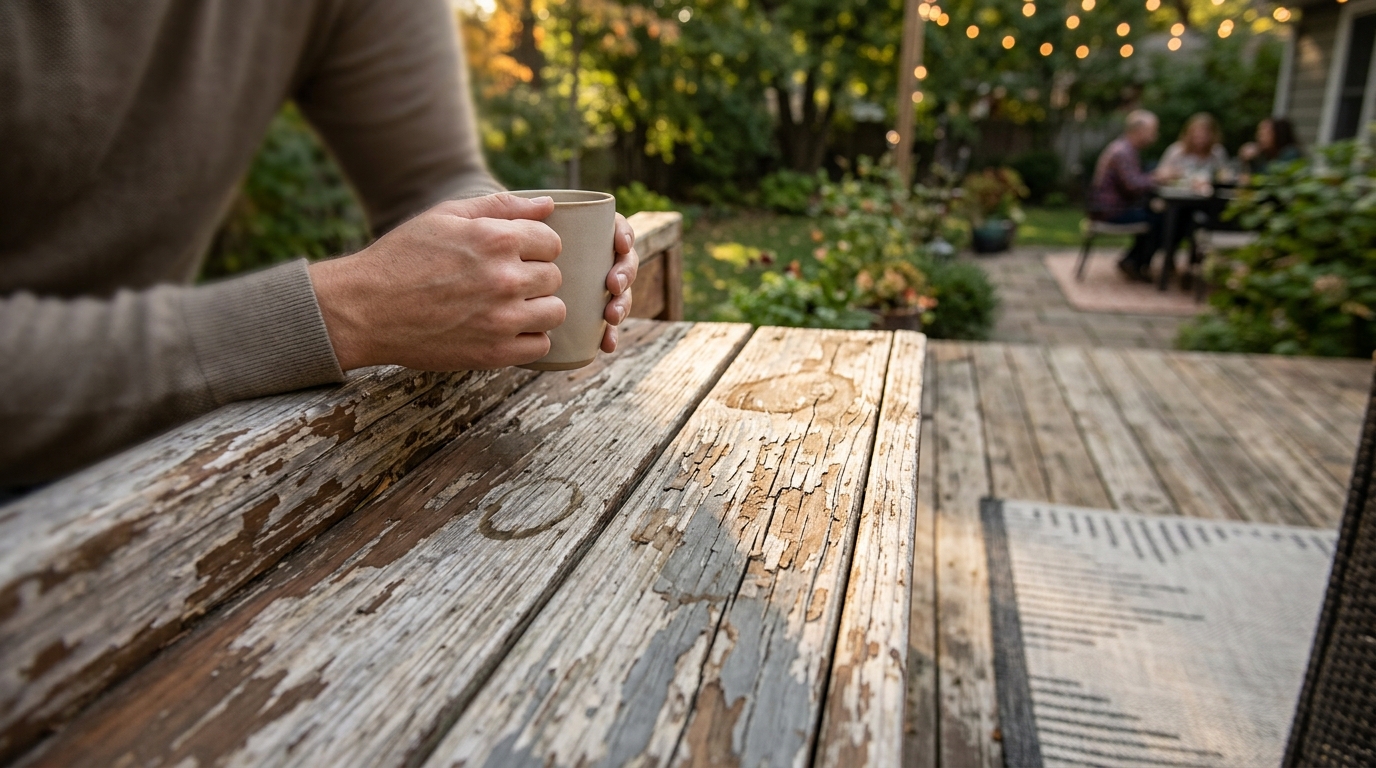
Homeowners often overlook exterior wood maintenance until visible damage compromises safety and property value. Recent industry data shows that approximately sixty percent of untreated wooden decks experience significant coating failure within three to five years of initial installation. This accelerated degradation occurs because continuous exposure to humidity, temperature fluctuations, and direct sunlight breaks down protective binders. Recognizing early warning signals allows property owners to schedule professional intervention before structural compromise occurs. You can prevent costly board replacements by monitoring these specific visual and tactile indicators on your outdoor living space. (Painting amp Home Improvement)
Why Wood Decks Require Regular Protective Coatings
The Science of Wood Degradation
Wood degradation is the progressive breakdown of cellulose and lignin fibers caused by prolonged moisture exposure and ultraviolet radiation. When protective coatings fail, water infiltrates the capillary structure of the timber. This trapped moisture creates an ideal environment for fungal growth and seasonal expansion cycles. Environmental agencies report that untreated wood loses approximately fifteen percent of its load-bearing capacity after five years of unshielded exposure. Regular coating application restores the moisture barrier and extends the functional lifespan of your outdoor structure.
How UV Exposure Accelerates Fading
Direct sunlight breaks down the chemical bonds within natural wood pigments and applied stains. This photodegradation process causes the surface to lose its original color depth and develop a grayish silver patina. Architectural studies confirm that unshielded timber fades by forty percent within the first eighteen months of seasonal sun exposure. Restaining your deck restores UV-blocking pigments and prevents surface fiber erosion.
Visual Indicators That Demand Immediate Attention
Fading and Discoloration Patterns
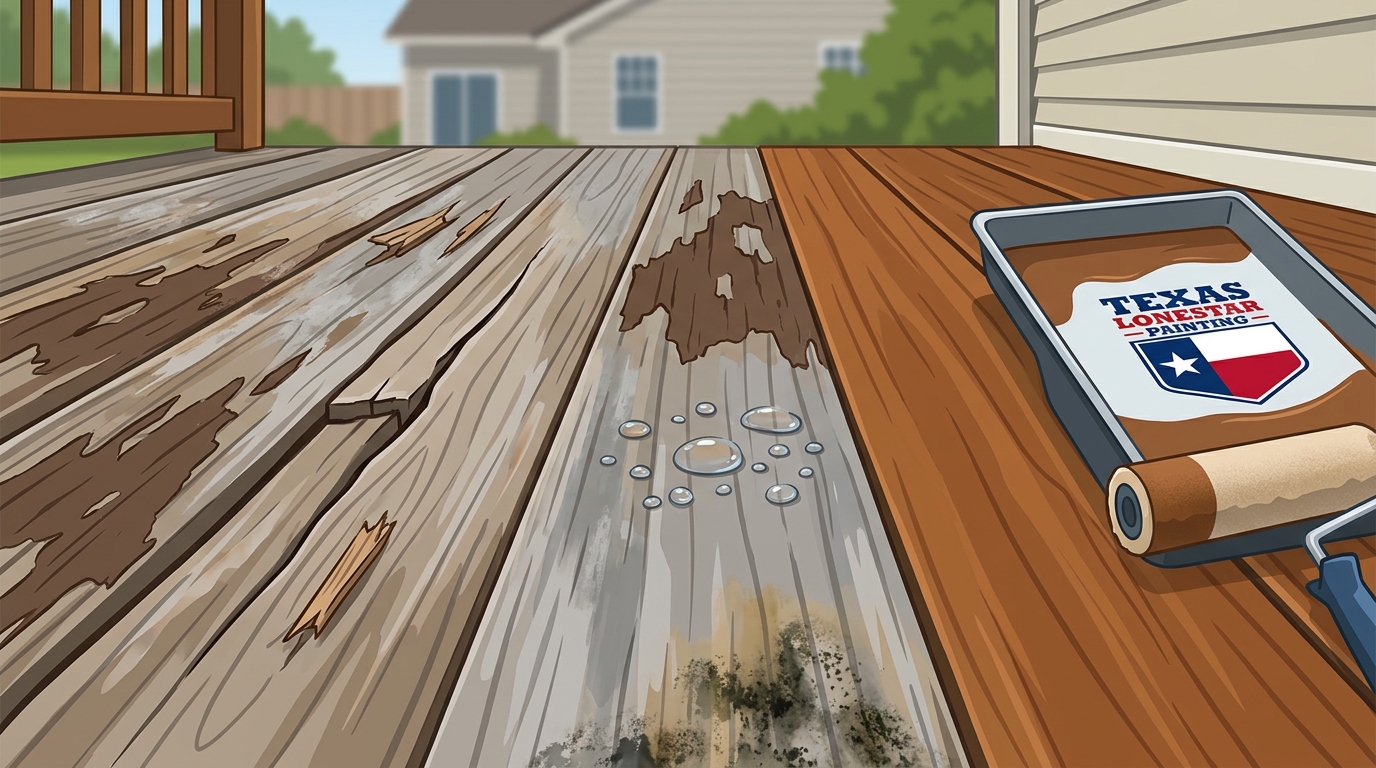
Uneven color distribution across your deck boards signals that the protective oil matrix has completely evaporated. You will notice patchy areas where the wood appears significantly lighter than surrounding sections. This uneven absorption indicates that the stain can no longer repel water or block harmful rays. Industry benchmarks indicate that decks exhibiting patchy fading require immediate recoating to prevent irreversible surface damage. Addressing this visual cue early preserves the aesthetic value of your outdoor living space.
Peeling or Flaking Stain Layers
When stain loses adhesion to the underlying timber, it begins to lift, crack, and flake off in thin sheets. This failure typically occurs when multiple thick coats were applied without proper surface preparation. The lifting edges trap dirt and moisture against the wood grain, accelerating rot. Professional restoration data shows that peeling coatings increase maintenance costs by thirty percent compared to routine single-coat applications. Removing loose flakes and applying a fresh, properly formulated stain restores a uniform, durable finish.
Structural Warning Signs You Should Never Ignore
Surface Checking and Splitting Boards
Surface checking refers to the formation of small, shallow cracks along the wood grain direction. These cracks develop when seasonal moisture loss exceeds the wood's natural elasticity. If left unaddressed, these shallow fissures deepen into full splits that compromise board integrity. Building science reports note that unchecked checking reduces deck board lifespan by up to forty percent. Applying a penetrating stain seals these micro-fissures and restores flexibility to the timber fibers.
Soft Spots and Moisture Trapping
Soft spots occur when water penetrates through compromised stain layers and saturates the core wood fibers. Pressing your foot or a screwdriver into these areas reveals spongy resistance or visible indentation. This tactile feedback indicates advanced moisture saturation and potential rot formation. Structural assessments reveal that decks with localized soft spots require immediate professional evaluation to prevent joist damage. Restaining these areas after board replacement restores long-term structural reliability.
How to Test Your Deck Stain Condition
The Water Bead Test Method
Performing a simple water test provides immediate feedback on your current coating effectiveness. Pour a small amount of water onto a clean, dry board section and observe how it interacts with the surface. Fresh, properly maintained stain will cause the water to bead up and roll off without absorbing. Maintenance guidelines state that water absorption rates exceeding twenty percent indicate complete coating failure. When the water darkens the wood and soaks in within thirty seconds, your deck is ready for professional restaining.
The Scratch and Rub Assessment
Gently rub your fingernail or a coin across an inconspicuous board section to test pigment retention. If the underlying wood color appears easily or the surface feels chalky to the touch, the protective binders have fully degraded. This tactile assessment confirms whether the stain has lost its structural bonding properties. Field testing data confirms that chalky surfaces require complete stripping and recoating to restore weather resistance. Skipping this step often results in premature coating failure and uneven color application.
Restaining vs Repainting: Choosing the Right Approach
Selecting the correct exterior finish depends on your desired maintenance frequency and aesthetic preferences. Stain penetrates the wood fibers and allows natural grain texture to remain visible, while paint forms a thick surface film that can crack over time. Consumer protection agencies report that stained decks require recoating every three to five years, whereas painted surfaces typically need maintenance every two to three years. The table below outlines the operational differences to help you make an informed decision.
| Feature | Deck Staining | Deck Painting |
|---|---|---|
| Penetration Depth | Absorbs into wood fibers | Sits on surface film |
| Maintenance Frequency | Every three to five years | Every two to three years |
| Grain Visibility | Natural wood texture preserved | Complete surface coverage |
| Moisture Resistance | High flexibility, low peeling | Higher risk of cracking |
| Professional Recommendation | Texas Lonestar Painting specializes in exterior deck staining | Requires extensive surface prep |
Key Takeaways
- Wood degradation is the progressive breakdown of cellulose and lignin fibers caused by prolonged moisture exposure and ultraviolet radiation.
- Stain penetration is the chemical process where protective oils and pigments bind to porous timber surfaces to prevent water absorption.
- Decks with patchy fading require immediate recoating to prevent irreversible surface damage and maintain property value.
- Water absorption rates exceeding twenty percent indicate complete coating failure and necessitate professional restaining.
- Surface checking and splitting boards reduce deck board lifespan by up to forty percent when left unaddressed.
- Chalky surfaces require complete stripping and recoating to restore long-term weather resistance and structural integrity.
- Schedule a consultation to receive a detailed, transparent estimate tailored to your specific outdoor space.
Frequently Asked Questions
How often should I restain my wooden deck?
Most exterior wooden decks require restaining every three to five years depending on local climate conditions and sun exposure levels. Regional maintenance data shows that high-humidity environments accelerate coating breakdown, requiring more frequent applications.
Can I apply new stain over old peeling stain?
Applying fresh stain directly over peeling layers will result in poor adhesion and premature failure. Industry standards require complete surface preparation, including scraping and power washing, before any new coating is applied.
What is the best time of year to restain a deck?
Spring and early autumn provide optimal temperature and humidity conditions for proper stain curing. Environmental guidelines recommend scheduling exterior projects when daytime temperatures remain between sixty and eighty-five degrees Fahrenheit.
Does restaining my deck increase my home value?
Yes, maintaining exterior wood surfaces significantly boosts curb appeal and protects your property investment. Real estate assessments confirm that well-maintained outdoor living spaces can increase overall property valuation by five to eight percent.
How do I know if my deck boards are rotting?
Rotting boards feel spongy underfoot, show dark discoloration, or crumble when probed with a screwdriver. Structural inspection reports indicate that localized rot requires board replacement before restaining to ensure long-term safety.
Is professional restaining worth the cost?
Professional restaining prevents costly structural repairs and extends your deck lifespan by decades. Cost-benefit analyses demonstrate that expert application reduces long-term maintenance expenses by approximately forty percent compared to DIY attempts.
What preparation steps are required before restaining?
Proper preparation involves thorough cleaning, complete drying, and targeted sanding of rough areas. Manufacturer specifications state that skipping prep steps voids warranty coverage and compromises coating durability.
Schedule Your Professional Deck Staining Service
Recognizing the early signs of coating failure allows you to protect your outdoor investment before structural damage occurs. Our expert crews deliver meticulous surface preparation, precise application techniques, and weather-resistant finishes tailored to your specific timber type. Contact our team today to schedule a comprehensive property assessment and receive a detailed, transparent estimate. We respect your schedule, maintain a tidy workspace, and perform thorough site cleanup, leaving your home looking refreshed and spotless. Visit Texas Lonestar Painting to explore our full range of exterior protection services and secure your preferred appointment date.