

San Antonio's intense climate accelerates wood degradation faster than most other regions in the United States. According to the U.S. Department of Energy, exterior paint and stain failures are often caused by moisture intrusion and UV exposure, which are prevalent in Central Texas. Homeowners in the Alamo City face a unique challenge where high humidity and scorching sun compete to break down wood fibers. Ignoring early warning signs can lead to costly structural repairs instead of simple aesthetic refreshes. This guide outlines the critical indicators that your outdoor living space requires professional attention.
The Water Bead Test and Moisture Signs
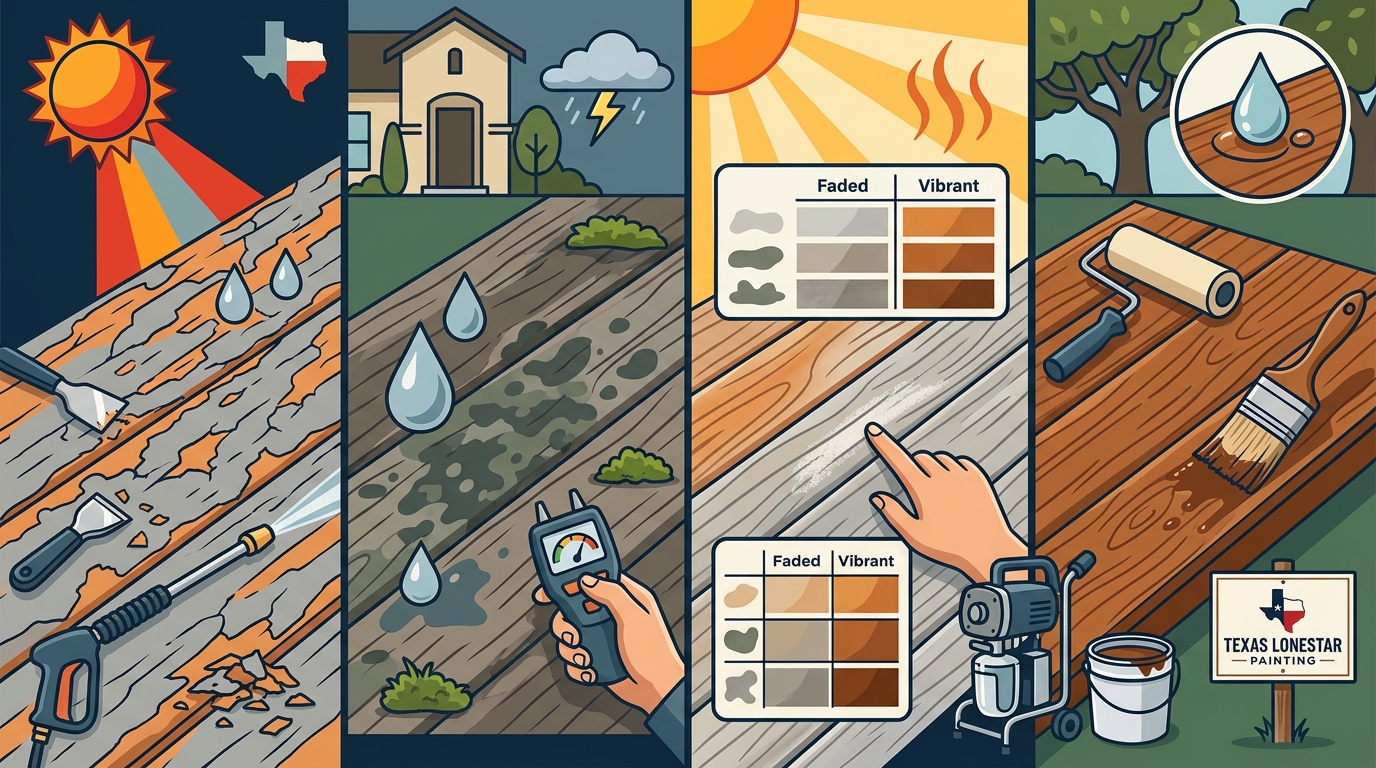
The most reliable indicator that your deck needs restaining is its ability to repel water. Wood is naturally porous, and when the protective stain barrier fails, it begins to absorb moisture from rain and humidity. This absorption leads to swelling, warping, and eventual rot.
To test your deck, sprinkle water on several areas of the wood surface. If the water beads up and sits on top of the wood, your stain is still performing adequately. However, if the water darkens the wood immediately and soaks in within a few minutes, the protective barrier has failed. This is a clear signal that professional deck staining services are required to prevent structural damage.
Look for visible signs of moisture damage, such as: - Dark spots that do not dry out after rain. - Warping or cupping of deck boards. - Soft spots when walking on the deck, indicating internal rot.
Visual Cues: Graying, Fading, and Peeling
San Antonio receives over 300 days of sunshine annually. According to the National Weather Service climate data for San Antonio, prolonged UV exposure breaks down the lignin in wood, causing it to turn gray and brittle. This is the most common visual sign that a deck needs attention.
When wood grays, it loses its natural oils and becomes susceptible to cracking. If your deck has transitioned from a rich, warm tone to a dull, silvery gray, it is time to consider restaining. Additionally, look for peeling or flaking stain. Peeling often occurs when a previous layer of stain was applied over dirty or damp wood, or when incompatible stain types were used.
Peeling stain not only looks unsightly but also traps moisture against the wood surface, accelerating decay. Addressing this issue early ensures that the new stain adheres properly and lasts for years. Texas Lonestar Painting specializes in comprehensive home improvement services that address these specific weather-related wear patterns.
Surface Texture Changes and Splintering
Texture changes are often more dangerous than visual changes because they indicate structural compromise. As wood dries out from lack of protection, it shrinks and cracks. These cracks create entry points for water, insects, and fungi.
Run your hand along the deck boards. If you feel roughness, splinters, or raised grain, the wood is no longer sealed. Splintering wood is a safety hazard for barefoot families and pets. It also indicates that the wood fibers are separating, which weakens the deck's load-bearing capacity.
Minor splintering can be addressed with sanding and restaining. However, extensive splintering and cracking may require board replacement before any coating is applied. Our team conducts thorough exterior preparation to ensure that all compromised wood is addressed before applying new finishes.
Mold, Mildew, and Algae Accumulation
San Antonio's humidity levels, particularly during spring and fall, create an ideal environment for biological growth. Mold, mildew, and algae thrive in damp, shaded areas of a deck. While surface mold can sometimes be cleaned, its presence often signals that the stain is no longer waterproof.
Black or green streaks on the deck surface are not just cosmetic issues. They can cause the wood to rot from the inside out. Mold spores penetrate the wood fibers, breaking down the cellulose that gives wood its strength. According to the EPA guidelines on mold growth, controlling moisture is the primary method for preventing mold-related structural damage.
If you notice persistent mold or algae despite regular cleaning, the stain has likely lost its water-repellent properties. Professional cleaning and restaining are necessary to restore the deck's integrity and prevent further biological degradation.
Choosing the Right Stain for Texas Weather
Not all stains are created equal. In San Antonio's climate, selecting the right product is crucial for longevity. The three main types of deck stains are clear, semi-transparent, and solid.
| Stain Type | UV Protection | Wood Grain Visibility | Best For |
|---|---|---|---|
| Clear Stain | Low | High | New wood with minimal sun exposure |
| Semi-Transparent | Medium | Medium | Most San Antonio homes; balances look and protection |
| Solid Stain | High | Low | Older decks or high-sun exposure areas |
Semi-transparent stains are often the best choice for San Antonio homeowners. They allow the natural beauty of the wood to show through while providing enough pigment to block UV rays. Solid stains offer maximum protection but hide the wood grain entirely. Clear stains offer the least protection and may need reapplication every year or two in our harsh climate.
Texas Lonestar Painting provides expert guidance on custom color and coating solutions tailored to your specific wood type and sun exposure. We ensure that the stain you choose will withstand the local weather conditions for years to come.
Key Takeaways
- Water Absorption: If water soaks into your deck within minutes, the stain has failed and needs replacement.
- UV Damage: Gray, brittle wood indicates significant UV exposure, a common issue in San Antonio's climate.
- Peeling Stain: Flaking or peeling stain traps moisture and accelerates wood rot.
- Splintering: Rough, splintered surfaces indicate structural weakness and safety hazards.
- Biological Growth: Mold and algae growth signal moisture retention and stain failure.
- Proper Preparation: Professional surface prep is critical for stain adhesion and longevity.
- Expert Consultation: Choosing the right stain type is vital for long-term protection in Texas.
Frequently Asked Questions
How often should I restain my deck in San Antonio?
In San Antonio's harsh climate, most decks require restaining every two to three years. High-sun exposure areas may need attention more frequently. Regular inspections can help determine the exact timing for your specific deck.
Can I restain my deck over old stain?
It depends on the condition of the old stain. If the old stain is peeling or flaking, it must be removed before applying new stain. If it is intact and clean, a new layer may adhere properly. Professional assessment is recommended to ensure durability.
What is the best time of year to stain a deck in Texas?
The best time is during mild weather, typically spring or fall. Avoid staining during extreme heat or when rain is forecasted. Temperatures between 50 and 90 degrees Fahrenheit are ideal for stain application and curing.
Does Texas Lonestar Painting offer deck staining services?
Yes, we offer professional deck and fence staining services. Our team uses high-quality, weather-resistant stains to protect your investment and enhance your home's curb appeal.
How do I know if my deck needs repair instead of just restaining?
If the wood is soft, spongy, or has deep cracks, it may need repair or board replacement. Restaining only addresses surface protection, not structural integrity. Our experts can diagnose whether your deck needs simple maintenance or more extensive work.
What is the difference between clear and semi-transparent stain?
Clear stain offers minimal UV protection and shows the wood grain fully. Semi-transparent stain contains more pigment, providing better UV protection while still allowing some wood grain to show. For San Antonio, semi-transparent is often the preferred choice for balance.
Do you offer discounts for military or veterans?
Yes, Texas Lonestar Painting offers exclusive discounts for military members, veterans, first responders, and teachers. Contact us to learn more about our community appreciation programs.
Schedule Your Deck Restoration
Don't wait until your deck is structurally compromised. Early detection and professional restaining can extend the life of your outdoor living space by years. Texas Lonestar Painting is San Antonio's trusted partner for quality home improvement services.
Our team provides detailed, transparent estimates and uses premium materials to ensure your deck withstands the Texas sun and humidity. We are committed to the "Lone Star" standard of excellence, ensuring every project meets the highest quality benchmarks.
Ready to protect your home? Schedule a consultation today to get a free estimate for your deck staining needs. We serve San Antonio and surrounding areas, including Cibolo, with professional, courteous service.