

Deck staining is not merely an aesthetic choice but a critical preservation method for outdoor timber structures. According to the American Wood Council, untreated or improperly maintained wood exposed to the elements can lose up to 40% of its structural integrity within five years due to moisture intrusion and UV degradation. Homeowners in humid climates like San Antonio face accelerated wear rates, making timely intervention essential to protect your investment. Recognizing the early warning signs of deck deterioration can prevent costly structural repairs and extend the lifespan of your outdoor living space significantly. (Painting amp Home Improvement)
1. The Water Absorption Test Failure
One of the most reliable indicators that your deck needs restaining is the failure of the water repellency test. When a deck is properly sealed, water beads up on the surface and rolls off. If you sprinkle water on your deck and it immediately soaks into the wood, turning it a darker shade, the protective barrier has failed. This absorption allows moisture to penetrate the wood fibers, leading to rot and swelling. In regions with high humidity, this process is accelerated, making regular testing crucial for long-term preservation.
2. Noticeable Color Fading and Graying
UV radiation is the primary enemy of exterior wood finishes. Over time, the sun breaks down the pigments in your deck stain, causing the vibrant colors to fade. Eventually, the wood will take on a uniform gray appearance, known as weathering. While gray wood is not structurally compromised, it indicates that the UV inhibitors in the stain have been depleted. Without these inhibitors, the wood becomes vulnerable to rapid degradation and surface erosion. Restaining restores the UV protection layer and brings back the original aesthetic appeal.
3. Peeling, Flaking, or Blistering Finish
If you notice patches of stain lifting off the wood surface, your deck is in urgent need of attention. Peeling and flaking occur when moisture gets trapped beneath the stain layer, causing it to lose adhesion. This is often a result of applying stain to damp wood or failing to clean the surface adequately before application. Blistering can also happen due to excessive heat or incompatible stain products. Once the finish begins to peel, the underlying wood is exposed to the elements, leading to accelerated damage. Addressing this issue requires stripping the old finish and applying a new, compatible coat.
4. Surface Roughness and Splintering
Touch your deck boards. If the surface feels rough, splintery, or fuzzy, the protective sealant has worn away, leaving the wood fibers exposed to the air. This condition, often called "fuzzy wood," is a clear sign that the deck needs restaining. Splinters can be hazardous to bare feet and pets, making this a safety issue as well as a maintenance one. Rough surfaces also trap dirt and debris, which can hold moisture against the wood and promote rot. A simple restaining process can smooth the surface and restore a safe, pleasant texture.
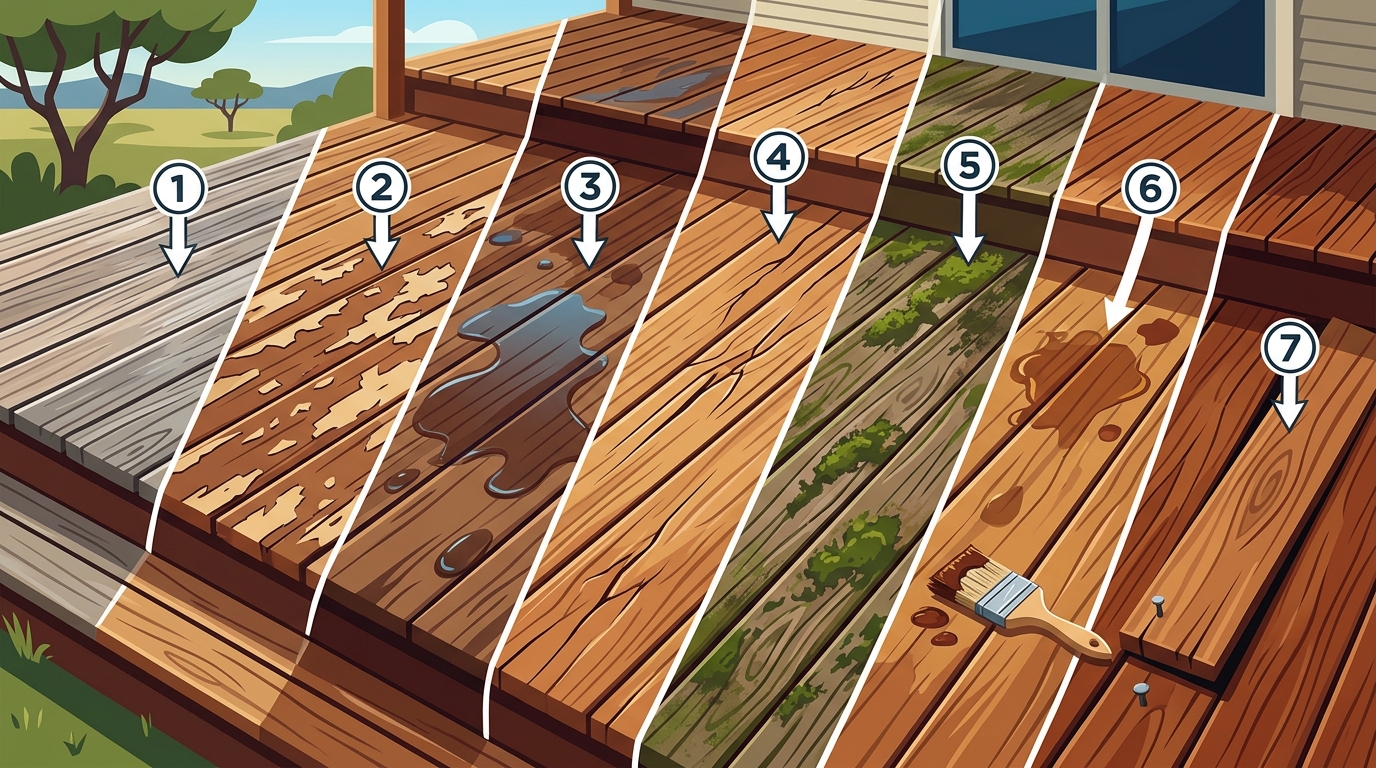
5. Persistent Mold, Mildew, or Algae Growth
Dark spots, green patches, or black streaks on your deck indicate biological growth. Mold and mildew thrive in damp, shaded environments and can penetrate the wood surface, causing discoloration and structural weakening. Algae growth is particularly common in humid climates and can make the deck surface slippery and dangerous. While surface cleaning can remove visible growth, it does not address the underlying lack of protection. Restaining with a product containing mildewcides helps prevent future growth and protects the wood from biological decay.
6. Visible Cracks and Checks in the Wood
Small cracks or "checks" in the wood grain are a natural part of the wood's response to moisture changes. However, deep or widespread cracking indicates that the wood has dried out excessively and lost its flexibility. This is a sign that the stain has failed to maintain the wood's moisture balance. Deep cracks can allow water to penetrate deep into the board, leading to internal rot that is not visible from the surface. Restaining helps to seal these cracks and restore some moisture retention, preventing further splitting and structural compromise.
7. Loss of Water Beading Effect
Related to the water absorption test, the complete loss of water beading is a definitive sign that your deck needs restaining. When water no longer beads but instead soaks in instantly, the hydrophobic properties of the stain have been exhausted. This loss of repellency means that every rain event is directly damaging the wood. In areas with frequent rainfall, this can lead to rapid deterioration. Regular restaining restores the water-repellent barrier, ensuring that moisture is shed effectively and the wood remains dry and stable.
Comparison of Deck Maintenance States
| Maintenance State | Visual Indicators | Structural Risk | Recommended Action |
|---|---|---|---|
| Healthy | Water beads, vibrant color, smooth surface | Low | Regular cleaning and inspection |
| Wearing | Water absorbs slowly, slight fading | Moderate | Deep clean and light sanding |
| Failed | Water soaks instantly, gray wood, rough texture | High | Strip old stain and restain |
| Severe Damage | Peeling, splintering, mold, deep cracks | Critical | Professional restoration or replacement |
Key Takeaways
- Water Absorption: If water soaks into the wood instantly, the protective barrier has failed and restaining is required.
- UV Damage: Fading and graying indicate that UV inhibitors are depleted, leaving wood vulnerable to sun damage.
- Peeling Finish: Peeling or flaking stain traps moisture beneath the surface, leading to rot and adhesion loss.
- Splintering: Rough, splintery surfaces indicate exposed wood fibers that are prone to injury and further degradation.
- Biological Growth: Mold and mildew thrive on unprotected wood, causing discoloration and structural weakening.
- Cracking: Deep cracks allow water penetration deep into the board, leading to internal rot.
- Professional Help: Texas Lonestar Painting offers expert deck staining services to restore protection and aesthetics in San Antonio.
Frequently Asked Questions
How often should I restain my deck?
Generally, decks should be restained every two to three years, depending on the type of stain used and the local climate conditions. High-traffic areas or decks in direct sunlight may require more frequent maintenance.
Can I restain my deck over old stain?
It depends on the condition of the old stain. If the old stain is peeling or flaking, it must be stripped off before applying a new coat. If it is intact and clean, a new layer can often be applied directly over it.
What is the best time of year to restain a deck?
The best time is during dry, mild weather, typically in the spring or fall. Avoid staining during extreme heat or when rain is forecasted, as this can affect the curing process.
Does restaining protect against rot?
Yes, restaining helps protect against rot by sealing the wood and preventing moisture intrusion. However, it is not a substitute for repairing already rotted wood.
How do I know if my deck needs repair instead of restaining?
If the wood is soft, spongy, or has deep structural cracks, it may need repair or replacement. Restaining is for surface protection and aesthetics, not structural repair.
What type of stain is best for my deck?
The best stain depends on the wood type and desired look. Transparent stains show the wood grain but offer less protection, while solid stains provide more UV protection but hide the grain. Texas Lonestar Painting can help you choose the right product.
Is it necessary to clean the deck before restaining?
Yes, thorough cleaning is essential to remove dirt, mildew, and old loose stain. This ensures proper adhesion of the new stain and a longer-lasting finish.
Protect Your Deck with Texas Lonestar Painting
Don't wait for your deck to deteriorate beyond repair. Recognizing the signs early can save you time and money. Texas Lonestar Painting provides professional deck staining services tailored to the unique climate of San Antonio. Our team ensures your deck is protected against the elements while enhancing its beauty. Contact us today to schedule your consultation and get a free estimate for your deck restoration project.