
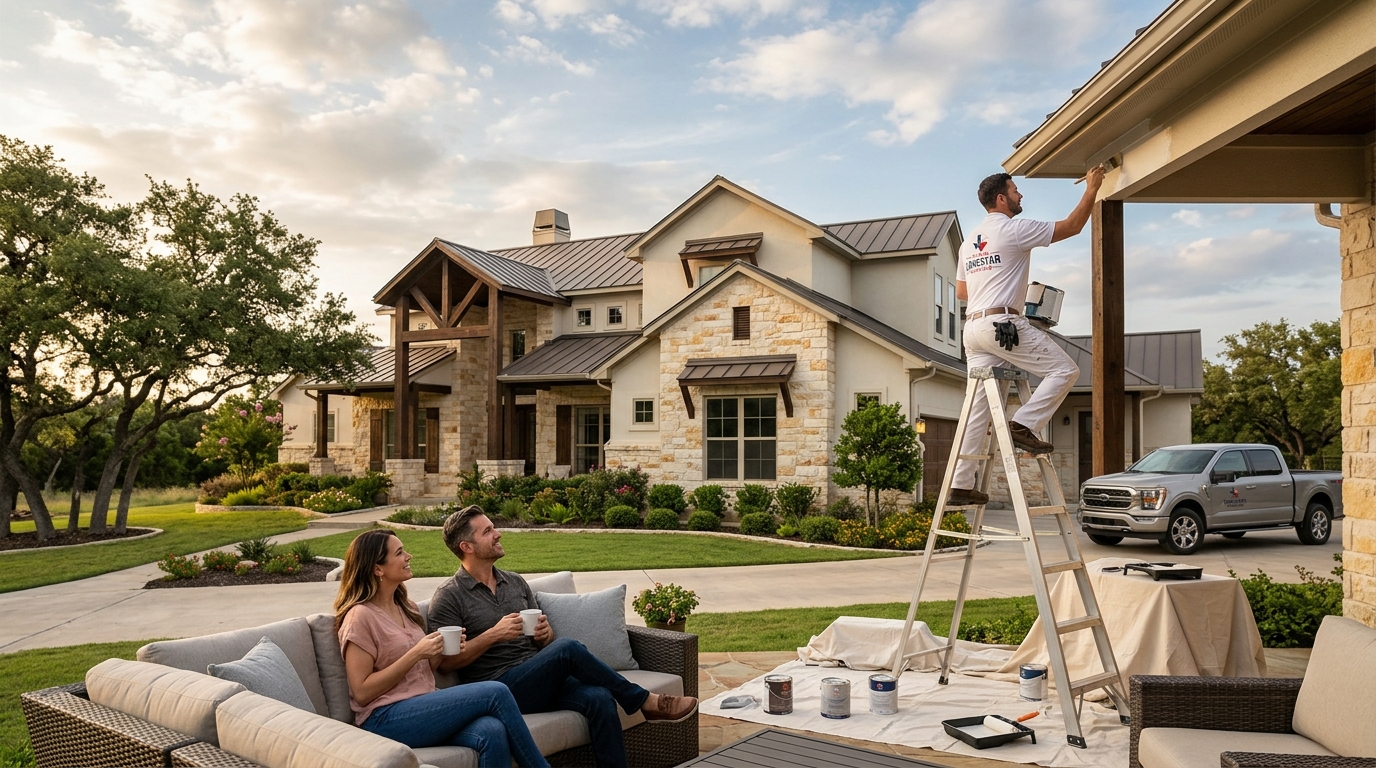
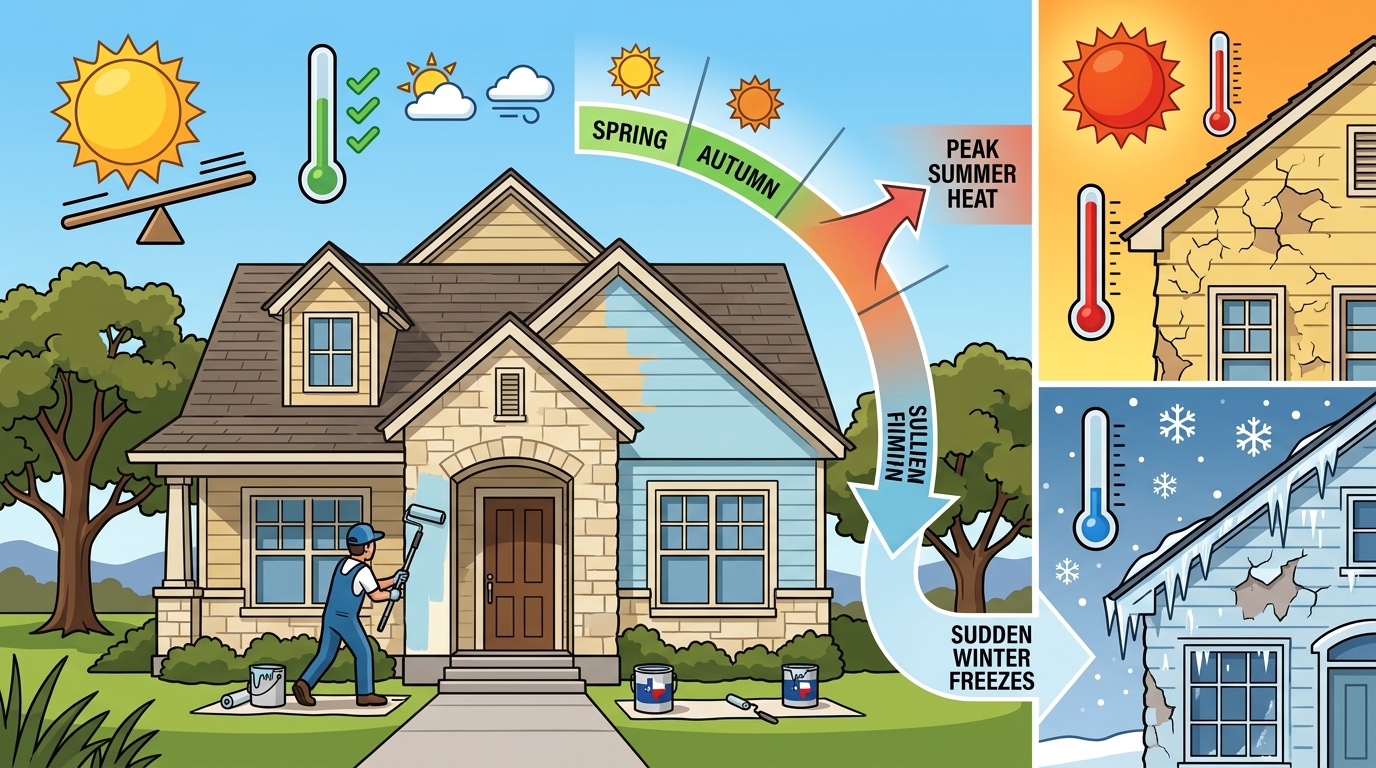
Homeowners across the Lone Star State face unique weather challenges that directly impact coating longevity and adhesion. According to regional climate data, Texas experiences extreme temperature swings that can compromise fresh paint if applied during peak summer heat or sudden winter freezes. Proper timing prevents premature peeling, reduces maintenance frequency, and protects your property investment. This guide breaks down the optimal scheduling windows for residential and commercial exterior projects in San Antonio and surrounding regions.
Optimal Seasonal Windows for Texas Exterior Painting
The ideal painting season in Texas spans from late February through mid-April. During this window, daytime temperatures consistently remain between sixty and eighty degrees Fahrenheit. This range allows coatings to cure properly without rapid evaporation or extended drying delays. Environmental protection agencies note that applying coatings outside this window increases the risk of blistering and poor adhesion. Spring brings stable humidity levels and minimal rainfall, creating predictable working conditions for professional crews. Many property managers schedule projects during this period to ensure completion before the intense summer heat arrives. Early spring also allows painters to address winter damage like hairline cracks and loose caulk before applying final coats. Exterior painting services thrive when crews can work continuously without weather interruptions. Scheduling your project in March typically guarantees a smooth workflow and a durable finish that lasts for years.
Temperature and Humidity Guidelines
Paint manufacturers specify strict temperature ranges for exterior applications. Exterior latex and acrylic coatings require ambient temperatures above fifty degrees Fahrenheit during application and for at least forty-eight hours afterward. Federal housing guidelines emphasize that temperature fluctuations below this threshold prevent proper film formation. High humidity levels above seventy percent also delay curing and encourage mildew growth under fresh paint. Professional painters monitor daily forecasts to avoid scheduling projects during predicted rain events or sudden cold fronts. San Antonio weather patterns typically stabilize by early March, making it the most reliable month for exterior work. Summer months often exceed ninety degrees, which causes paint to dry too quickly and creates visible brush marks. Winter months bring unpredictable freezes that can crack uncured coatings. Tracking these metrics ensures your project stays on schedule and delivers a flawless finish.
Surface Preparation and Climate Readiness
Proper surface preparation determines how well exterior paint withstands Texas weather. Texas Lonestar Painting follows a rigorous three-step process that begins with thorough power washing. Removing dirt, chalked paint, and biological growth creates a clean substrate for new coatings. Scraping loose material and sanding rough edges ensures maximum adhesion. Priming porous surfaces like bare wood or stucco seals the material and prevents moisture intrusion. Energy efficiency standards highlight that properly sealed exteriors reduce HVAC loads by improving thermal barriers. Skipping prep steps to save time often results in premature failure and costly repairs. Professional crews inspect flashing, trim, and caulk lines before applying topcoats. This methodical approach prevents water damage and extends the lifespan of your exterior paint system. Homeowners who prioritize preparation see fewer touch-ups and maintain higher property values over time.
Material Selection for Texas Weather
Choosing the right coating system matters when Texas sun and humidity are constant factors. High-quality acrylic latex paints offer superior flexibility and UV resistance compared to older oil-based formulas. These modern coatings expand and contract with temperature changes without cracking or peeling. Cabinet painting and refreshing techniques also apply to exterior trim when using premium exterior-grade formulations. Stucco and brick surfaces require breathable coatings that allow moisture to escape rather than trapping it inside. Darker colors absorb more heat and may require specialized reflective pigments to prevent premature fading. Professional painters recommend matte or low-sheen finishes for stucco to minimize texture visibility and hide minor surface imperfections. Lighter tones reflect sunlight and reduce thermal stress on underlying materials. Selecting the correct sheen and formulation ensures your exterior paint system performs reliably through multiple Texas seasons. Consulting with experienced contractors prevents costly material mismatches and guarantees long-term durability.
Commercial and Multi-Unit Painting Schedules
Commercial properties and apartment complexes require strategic scheduling to minimize tenant disruption. Many property managers book exterior projects during late winter or early spring to avoid peak business hours and summer vacation periods. Multi-story buildings often need scaffolding and specialized equipment that require additional permitting and safety inspections. Commercial exterior painting projects benefit from phased approaches that isolate active work zones while keeping entrances accessible. Coordinating with building management ensures proper waste disposal and noise compliance with local ordinances. Large-scale projects typically require detailed project timelines that account for weather delays and material delivery schedules. Professional contractors provide transparent quotes that break down prep work, materials, and labor costs. This transparency prevents budget overruns and keeps projects on track. Commercial property owners who plan ahead secure better contractor availability and avoid rush pricing during peak seasons.
Common Scheduling Mistakes to Avoid
Homeowners often rush exterior projects without considering long-term weather patterns. Applying paint during unseasonably warm February days can backfire when a sudden cold snap arrives. Coatings need consistent temperatures to cure properly, and rapid cooling creates weak bonds that fail within months. Another frequent error involves ignoring humidity levels when scheduling outdoor work. High moisture content in the air prevents solvents from evaporating correctly, leading to extended drying times and sticky surfaces. Some property owners attempt DIY projects without checking local weather forecasts or manufacturer specifications. Professional painters monitor daily conditions and adjust schedules accordingly to maintain quality standards. Contact us to schedule a consultation and avoid these common pitfalls. Proper planning ensures your exterior paint system performs reliably and protects your property investment for years to come.
Seasonal Painting Comparison
| Season | Temperature Range | Humidity Impact | Recommended Action |
|---|---|---|---|
| Winter | Below fifty degrees | Variable | Postpone application |
| Early Spring | Sixty to eighty degrees | Low to moderate | Schedule exterior painting |
| Summer | Ninety degrees and above | High | Avoid direct sun exposure |
| Fall | Fifty to seventy degrees | Moderate | Complete touch-ups |
Key Takeaways
- Optimal exterior painting occurs between late February and mid-April when temperatures stay between sixty and eighty degrees.
- Humidity levels above seventy percent delay curing and increase mildew risk under fresh coatings.
- Professional crews complete over three million projects annually using structured prep and premium acrylic formulations.
- Stucco and brick surfaces require breathable coatings to prevent trapped moisture and structural damage.
- Commercial properties benefit from phased scheduling to minimize tenant disruption and maintain safety compliance.
- Skipping surface preparation leads to premature peeling and costly repairs within two to three years.
- San Antonio contractors maintain a ninety-nine point nine percent customer satisfaction rate through transparent quoting and timely execution.
Frequently Asked Questions
Can I paint my exterior house in March in San Antonio?
Yes, March is widely considered the ideal month for exterior painting in San Antonio. Daytime temperatures typically range between sixty and eighty degrees, providing optimal curing conditions. Professional crews can complete projects efficiently without weather interruptions or coating failures.
What happens if I paint during extreme summer heat?
Applying exterior paint when temperatures exceed ninety degrees causes rapid solvent evaporation. This process creates visible brush marks, poor adhesion, and premature cracking. Coatings may also blister when trapped moisture expands under the film. Postponing until cooler months prevents these costly mistakes.
How does humidity affect exterior paint drying times?
High humidity levels above seventy percent significantly delay curing and encourage biological growth. Moisture in the air prevents solvents from evaporating correctly, leaving surfaces sticky and vulnerable to dirt accumulation. Professional painters monitor daily forecasts to avoid scheduling work during humid conditions.
Do I need to prep my stucco before painting?
Stucco requires thorough power washing, crack repair, and priming before applying topcoats. Stucco painting demands breathable coatings that allow moisture to escape rather than trapping it inside. Skipping preparation steps compromises adhesion and shortens the lifespan of your exterior paint system.
How long does a professional exterior painting project take?
Standard residential projects typically require three to five days depending on square footage and surface conditions. Commercial properties may take longer due to scaffolding requirements and phased scheduling. Professional crews provide detailed timelines that account for prep work, drying intervals, and final inspections.
What warranty do professional painters offer?
Reputable contractors typically offer two to five year warranties on exterior painting services. These guarantees cover peeling, blistering, and fading when proper surface preparation is followed. Texas Lonestar Painting maintains a fifty point zero star Google rating and completes over one thousand homeowner projects annually.
Can I paint my exterior house during winter?
Winter painting is generally discouraged when temperatures drop below fifty degrees. Coatings require consistent warmth to cure properly and form durable protective films. Applying paint during cold snaps often results in cracking and poor adhesion that fails within months.
Ready to Schedule Your Exterior Painting Project?
Securing your preferred contractor early ensures optimal scheduling and avoids peak season rush pricing. Professional crews provide detailed estimates that break down prep work, materials, and labor costs. Schedule your consultation today to receive a transparent quote tailored to your property. Our team delivers reliable results, maintains tidy workspaces, and completes projects on schedule. Contact us to transform your exterior and protect your investment for years to come.