
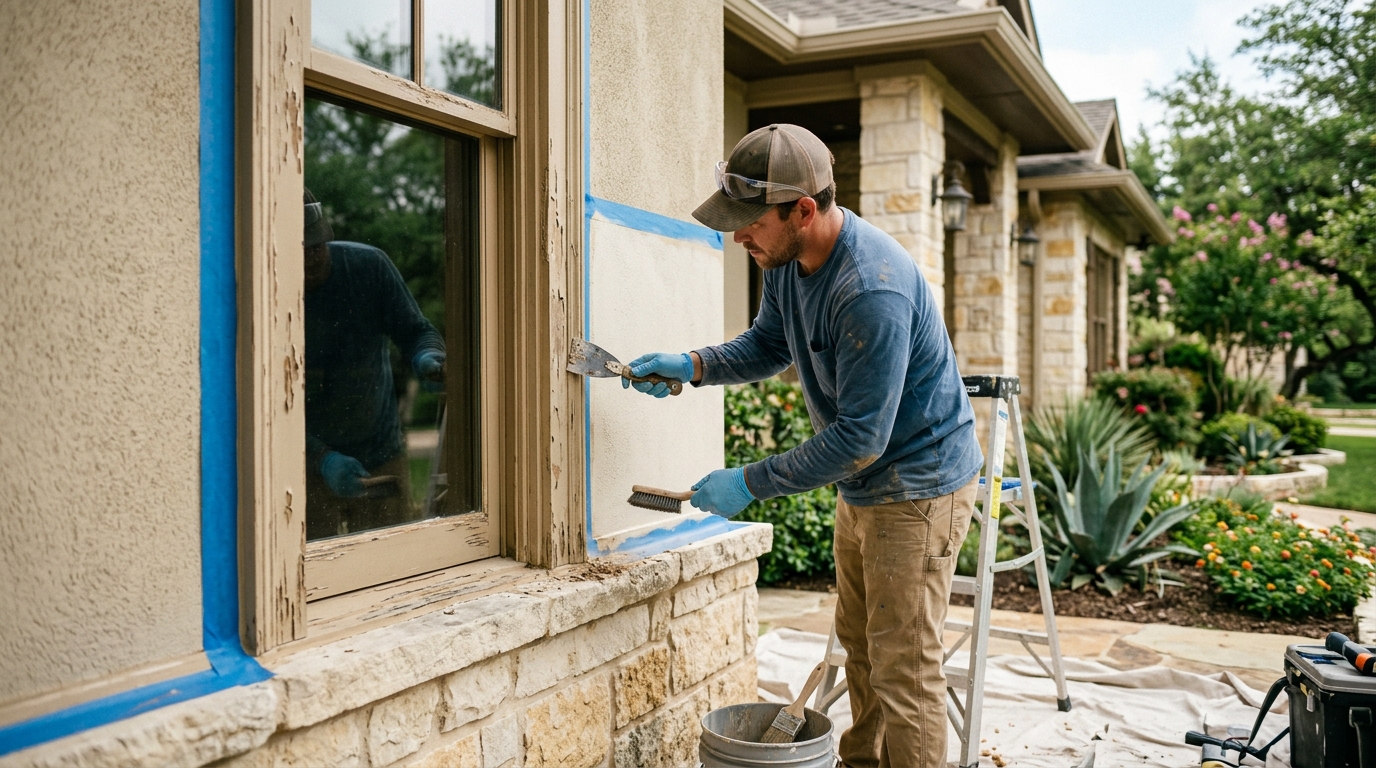
Proper exterior surface preparation is the single most important factor in ensuring a long-lasting paint finish. In San Antonio's intense climate, skipping prep steps leads to peeling, blistering, and premature failure. Texas Lonestar Painting emphasizes that a flawless finish begins with rigorous cleaning, repair, and priming before any color is applied.
Conducting a Thorough Surface Assessment
Before any work begins, a professional assessment is required to identify hidden defects. Exterior surface assessment is the process of inspecting all exterior materials for structural integrity and surface condition. In San Antonio, homes often feature stucco, brick, or siding, each requiring specific evaluation criteria. A professional crew will check for hairline cracks, spalling, or soft spots that indicate moisture intrusion.
For example, a homeowner might see a small crack in their stucco wall and assume it is cosmetic. However, this crack could be a sign of underlying foundation movement or trapped moisture. If left unaddressed, the new paint will crack along the same line within months. By identifying these issues early, contractors can recommend the correct repair method, ensuring the substrate is stable before painting.
Deep Cleaning and Degreasing
Paint does not adhere to dirt, grease, or biological growth. Deep cleaning is the removal of all contaminants from the exterior surface to ensure optimal adhesion. In the Texas climate, homes accumulate dust, pollen, and often algae or mildew, especially in shaded areas. Standard washing is often insufficient; professional crews use pressure washing and specialized cleaning agents to restore the surface to a bare, clean state.
Consider a brick home that has not been cleaned in five years. The brick may appear dark and stained, but the underlying surface is coated in a film of grime. If paint is applied over this film, it will peel off in sheets as the grime breaks down. Texas Lonestar Painting utilizes power washing and scraping to remove these layers, ensuring the new coating bonds directly to the masonry or wood.
Repairing Cracks and Damaged Areas
Structural repairs must be completed before any painting can occur. Surface repair is the process of filling, patching, or replacing damaged sections of the home's exterior. This includes filling nail holes, patching drywall or stucco, and replacing rotted wood. In San Antonio, wood trim and fascia are particularly susceptible to rot due to humidity and heat cycles.
A common issue is a rotted section of a window sill or door frame. If a painter simply paints over the rot, the wood will continue to decay, eventually causing the paint to bubble and fail. A professional approach involves cutting out the damaged wood, installing new material, and then priming the repair. This ensures the new paint has a solid, stable base to adhere to, extending the life of the finish by years.
Priming for Adhesion and Protection
Primer acts as the bridge between the substrate and the topcoat. Exterior priming is the application of a specialized base coat that seals the surface and promotes paint adhesion. Primer is not optional; it is a critical component of the painting system. It blocks stains, seals porous surfaces, and provides a uniform base for the final color.
For instance, when painting over a repaired stucco patch, the new patch is more porous than the surrounding old stucco. Without primer, the topcoat will absorb unevenly, resulting in a visible patch that looks different from the rest of the wall. By applying a high-adhesion primer, the surface is sealed, and the final paint color appears consistent and uniform across the entire wall.
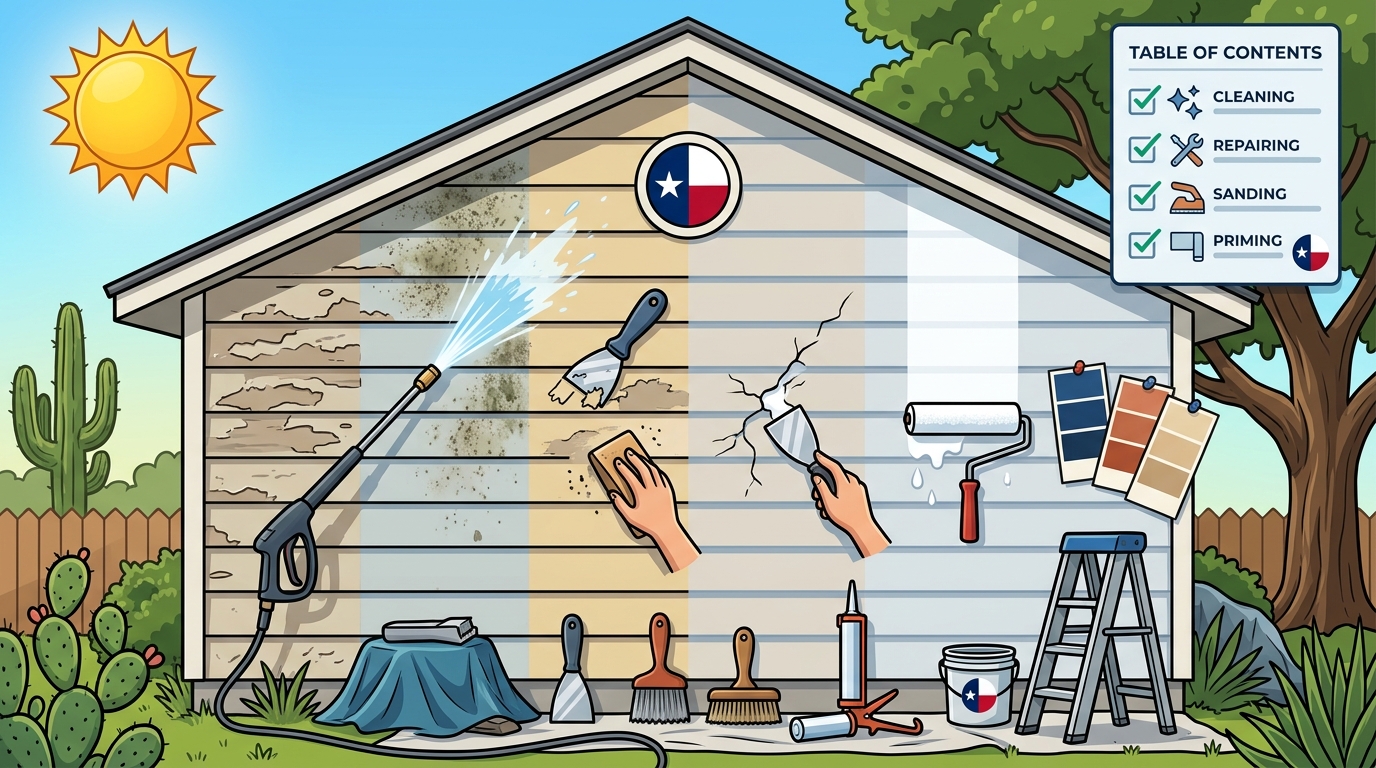
Selecting Climate-Resistant Materials
The choice of paint and primer must match the local environmental conditions. Climate-resistant coating is a paint system designed to withstand specific weather challenges, such as intense UV radiation and humidity. San Antonio experiences extreme temperature fluctuations and strong sun, which can degrade standard paints quickly. Professional painters select coatings specifically engineered for these conditions.
Using a standard interior paint on an exterior surface is a common mistake that leads to rapid failure. Exterior paints contain additives that provide flexibility, UV resistance, and moisture protection. Texas Lonestar Painting recommends weather-resistant paints that can expand and contract with temperature changes without cracking. This ensures the home remains protected and visually appealing for the longest possible duration.
Key Takeaways
- Assessment is the first step; identify cracks, rot, and structural issues before painting.
- Deep cleaning removes dirt, grease, and biological growth that prevent paint adhesion.
- Repairs must be structural; painting over rot or cracks leads to premature failure.
- Primer is essential for sealing porous surfaces and ensuring uniform color.
- Choose climate-resistant coatings designed for San Antonio's heat and humidity.
- Professional preparation extends the life of your paint job by years.
Frequently Asked Questions
How long does exterior preparation take?
Preparation time varies based on the condition of the home. A simple cleaning and minor repairs might take one to two days. Extensive repairs, such as replacing rotted wood or patching stucco, can add several days to the project timeline.
Can I paint over existing peeling paint?
No. Peeling paint must be scraped, sanded, and removed before applying new paint. Painting over loose paint will cause the new layer to peel as well. The surface must be solid and stable.
Do I need to prime the entire house?
Not always. Primer is required on bare wood, repaired areas, and surfaces with stains. If the existing paint is in good condition and you are changing to a similar color, spot priming may be sufficient. A professional will assess the specific needs of your home.
What is the best time of year to paint in San Antonio?
Spring and fall are ideal for exterior painting in San Antonio. Temperatures are moderate, allowing the paint to dry properly without the extreme heat of summer or the occasional cold snaps of winter. However, with proper planning, painting can be done in other seasons.
How do I know if my stucco needs repair?
Look for cracks, spalling (flaking), or soft spots. If you can press into the stucco with your thumb, it may be damaged. A professional inspection can determine the extent of the damage and the necessary repairs.