
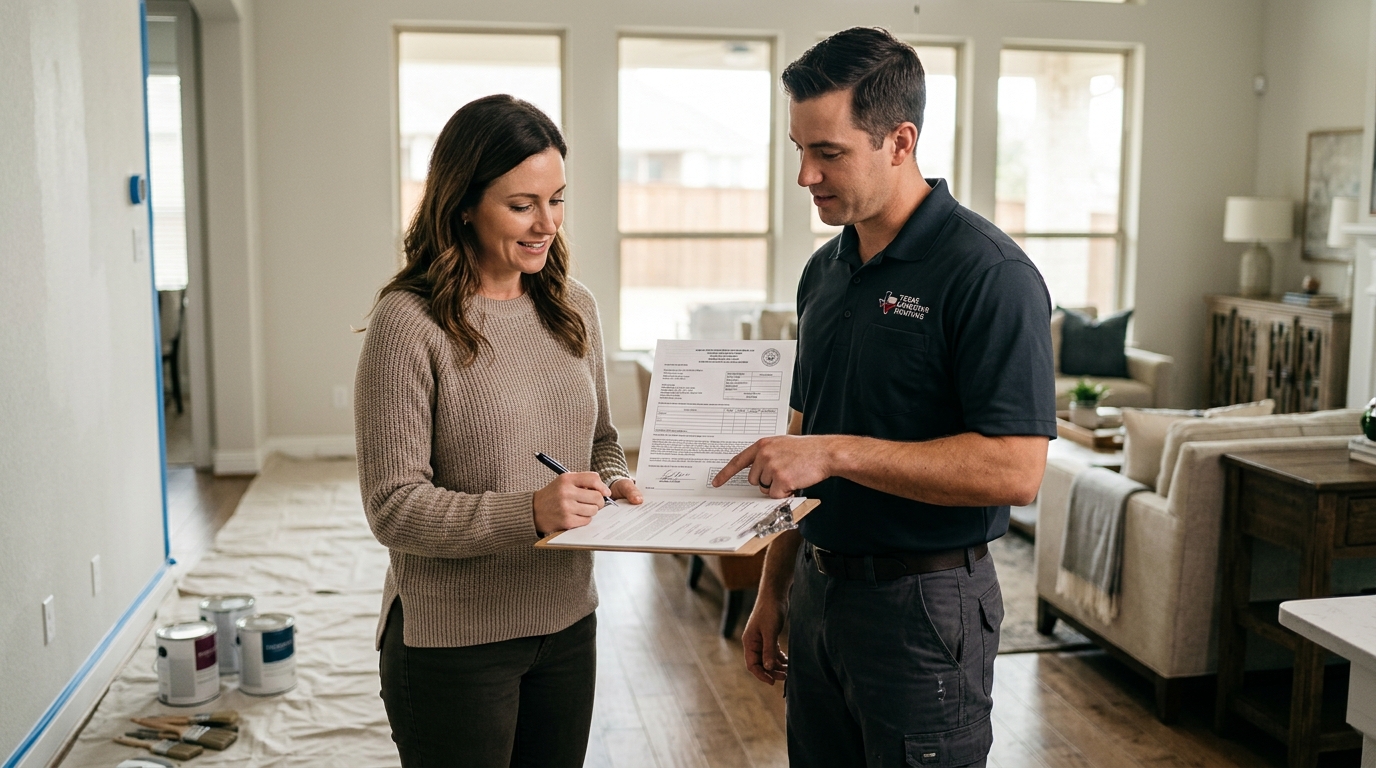
Before hiring a painter, you must verify they carry active general liability and workers' compensation insurance. This protects you from financial ruin if a worker is injured on your property or if they damage your home. Texas Lonestar Painting provides full documentation of these policies to ensure your project is safe and legally compliant from day one.
General Liability Coverage and Property Damage
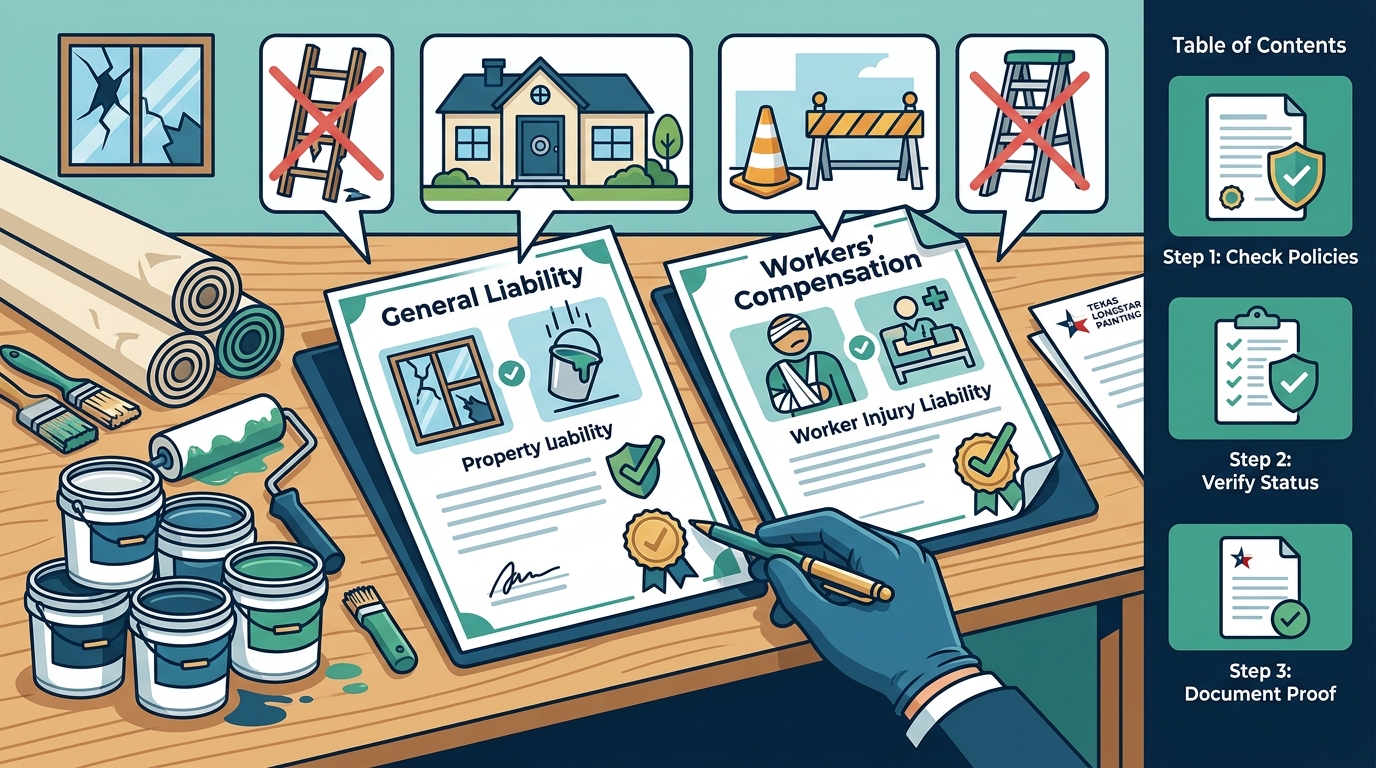
General liability insurance is a policy that covers third-party bodily injury and property damage claims. When a painter drops a ladder on your driveway or spills paint on your hardwood floors, this policy pays for the repairs. Without it, you are personally liable for those damages. You should request a Certificate of Insurance (COI) that explicitly lists your property as the certificate holder.
Workers' Compensation and Labor Law
Workers' compensation insurance is a state-mandated policy that provides medical benefits and wage replacement to employees injured on the job. In Texas, while not always mandatory for very small businesses, it is a critical indicator of a professional operation. If a painter falls from a ladder and breaks their arm, workers' comp covers their medical bills. If they are uninsured, they may sue you, the homeowner, for their injuries under the doctrine of premises liability.
Always ask for a workers' compensation policy number and verify it with the insurance carrier directly. Do not rely solely on a verbal assurance. A legitimate contractor will provide this information without hesitation. Texas Lonestar Painting ensures all crew members are covered, protecting both the workers and the homeowner from legal disputes.
Surety Bonds and Financial Guarantees
A surety bond is a financial guarantee that a contractor will complete a job according to the contract terms. While less common for small residential painting jobs, larger projects may require bonding. This protects you if the contractor abandons the job or fails to pay subcontractors. If a subcontractor is not paid, they can place a lien on your property. A bonded contractor assumes this risk, ensuring your home remains free of legal encumbrances.
Check if the painter is bonded and ask for the bond amount. This is a strong signal of financial responsibility. Texas Lonestar Painting operates with full transparency regarding their financial guarantees, ensuring that clients in San Antonio can trust the integrity of the business. Verifying bonding status is a simple step that adds a layer of security to your investment.
How to Verify Insurance Authenticity
Receiving a certificate of insurance is not enough; you must verify its authenticity. Insurance certificates can be forged or expired. Contact the insurance agent or carrier listed on the COI to confirm the policy is active and in good standing. Ask for the policy effective dates and expiration dates. Ensure the policy covers the specific dates of your project. If the policy expires mid-project, request a new certificate before work begins.
Use a third-party verification service if you are unsure how to check. Many states offer online portals where you can look up licensed contractors and their insurance status. In Texas, you can check the Texas Department of Insurance website for licensed agents. Texas Lonestar Painting encourages clients to verify all documents, fostering a culture of trust and accountability in the San Antonio market.
Consequences of Hiring Uninsured Painters
Hiring an uninsured painter exposes you to significant legal and financial risks. If an accident occurs, your homeowner's insurance may not cover the damages, or your premiums may skyrocket. You could also face lawsuits from injured workers or third parties. The cost of a single lawsuit can far exceed the savings from hiring a cheaper, uninsured contractor. Always prioritize safety and compliance over low bids.
Key Takeaways
- Request a Certificate of Insurance (COI) listing you as the certificate holder.
- Confirm active workers' compensation insurance to avoid premises liability lawsuits.
- Contact the insurance carrier directly to verify the policy is active and authentic.
- Check for surety bonds if the project is large or involves subcontractors.
- Choose established contractors like Texas Lonestar Painting who provide full documentation.
Frequently Asked Questions
What is the minimum general liability coverage I should require?
How do I verify if a painter's workers' comp is active?
Ask for the policy number and carrier name. Then, call the insurance company directly to confirm the policy is active and covers the specific dates of your project. Do not rely on a printed certificate alone.
Can I be sued if an uninsured painter gets hurt on my property?
Yes. In Texas, homeowners can be held liable for injuries to workers if the contractor is uninsured. Workers' compensation insurance protects you from these lawsuits by covering the worker's medical costs and lost wages.
What is a certificate holder on an insurance certificate?
A certificate holder is the party who requests the Certificate of Insurance. As the homeowner, you should be listed as the certificate holder to ensure you receive direct updates if the policy is cancelled or modified.
Does Texas Lonestar Painting provide insurance certificates?
Yes. Texas Lonestar Painting provides full documentation of their general liability and workers' compensation insurance upon request, ensuring transparency and peace of mind for all clients.
What happens if a painter damages my property and has no insurance?
You will likely have to pay for the repairs out of pocket. You may try to sue the painter, but if they have no assets, you may not recover the money. This is why verifying insurance before hiring is critical.