
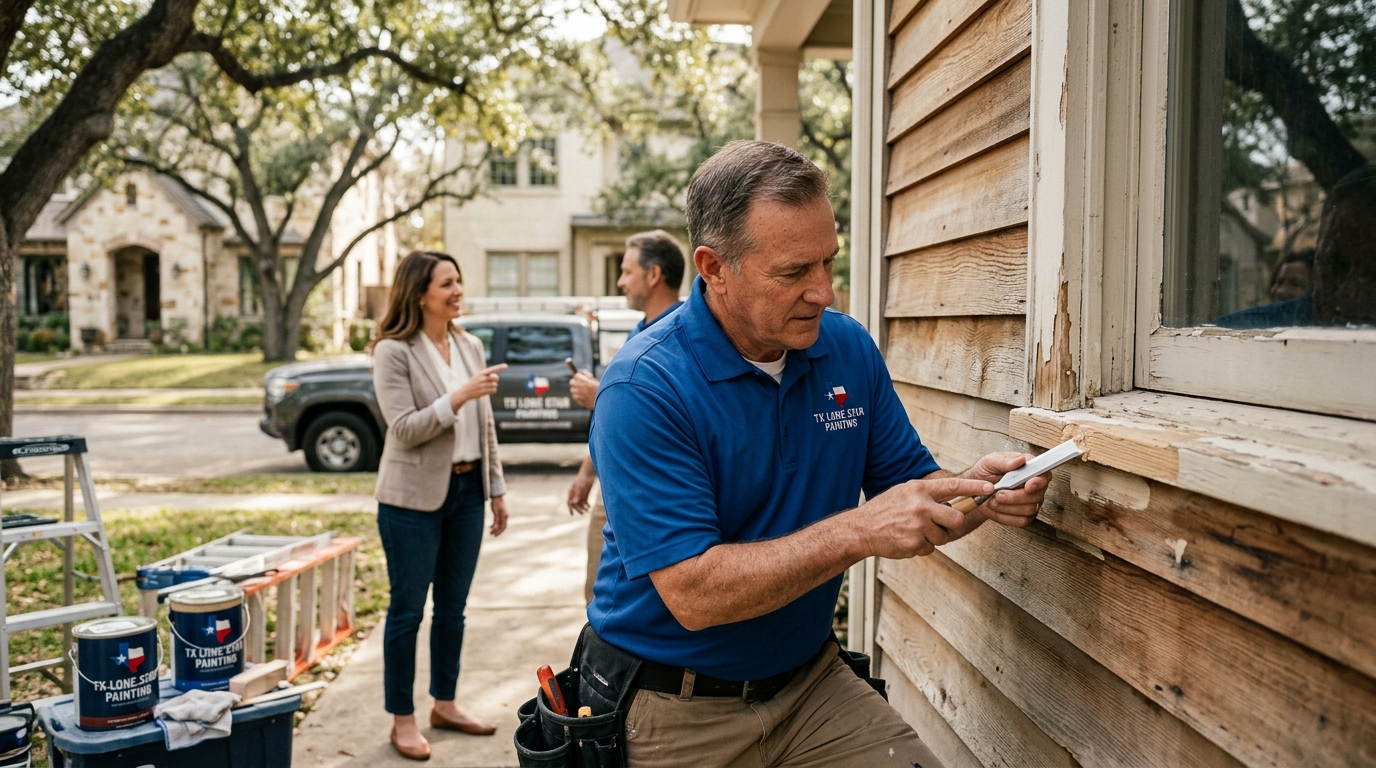
Professional exterior painters in San Antonio, such as Texas Lonestar Painting, handle wood rot repair, siding replacement, and window trim restoration as part of a comprehensive exterior project. This guide explains how these structural repairs integrate with painting services, why surface preparation is critical for the Texas climate, and how to identify a contractor who prioritizes long-term durability over quick cosmetic fixes.
Wood Rot Repair
Wood rot is a progressive structural failure caused by fungal decay, often triggered by trapped moisture in the San Antonio climate. Wood rot repair is the process of removing decayed material and replacing it with sound wood or structural epoxy to restore the integrity of the siding or trim. If a painter simply coats over rot, the decay continues to spread beneath the new finish, leading to peeling paint and further structural damage within a few years.
Identifying Active Decay
Homeowners should look for soft, spongy wood that crumbles under pressure. Dark discoloration or a musty odor are also common indicators. During a consultation, professional crews inspect these areas to determine if the rot is surface-level or has penetrated deep into the structural framing. This assessment dictates whether a simple patch is sufficient or if a larger section of the board must be removed.
The Repair Process
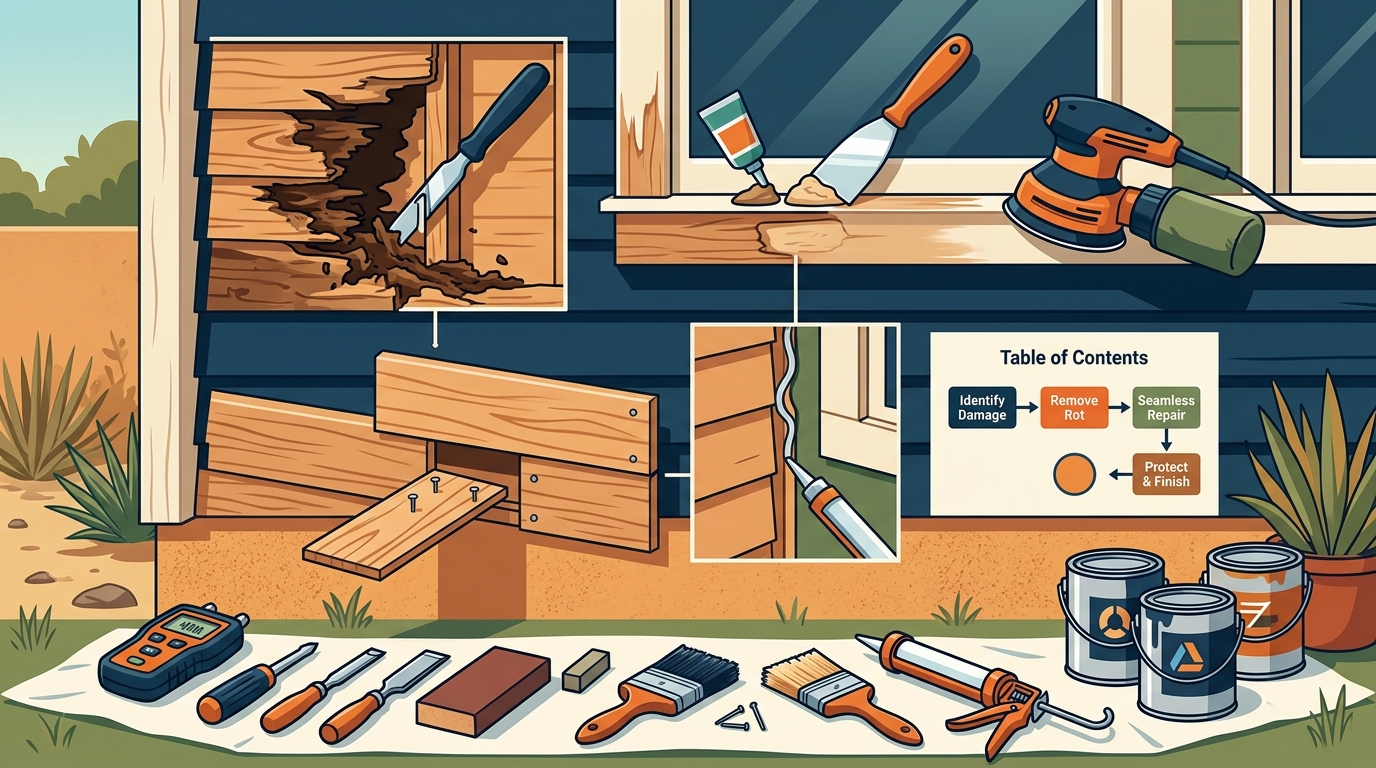
Effective repair involves cutting out the damaged section, treating the surrounding wood with a fungicide, and installing a new piece of lumber or a structural filler. The new material must be properly sealed and primed before any paint is applied. This multi-step approach ensures that the new wood bonds correctly with the existing structure and resists future moisture intrusion.
Damaged Siding Replacement
Exterior siding serves as the primary barrier against wind, rain, and intense UV radiation. Damaged siding replacement is the procedure of removing compromised panels and installing new materials to protect the home's envelope. In San Antonio, where temperature fluctuations and humidity can stress building materials, siding often suffers from warping, cracking, or delamination over time.
Material Considerations
When replacing siding, contractors must match the existing material or recommend a more durable alternative. Common materials in the region include vinyl, fiber cement, and wood. Each material requires specific fastening techniques and spacing to allow for thermal expansion. A professional crew ensures that the new siding is installed with proper flashing and weather barriers to prevent water from getting behind the panels.
Integration with Painting
Replacing siding is often done in conjunction with a full exterior repaint. This allows the contractor to ensure a uniform finish across the entire facade. By handling both the structural repair and the aesthetic application, the company provides a seamless transition from old, damaged surfaces to a fresh, protected exterior.
Window Trim Repair
Window trim is one of the most vulnerable areas on a home's exterior, constantly exposed to weather and physical impact. Window trim repair is the restoration of the wooden or vinyl frames surrounding windows to prevent water infiltration and improve curb appeal. Damaged trim can lead to leaks inside the home, causing drywall damage and mold growth in the interior walls.
Common Trim Issues
Typical problems include peeling paint, cracked corners, and rot at the bottom of the frame where it meets the sill. In older San Antonio homes, the trim may also suffer from insect damage. Repairing these areas requires precision to maintain the architectural details of the home. Contractors often use wood filler for minor cracks and replace entire sections for significant rot.
Sealing and Protection
After repairing the trim, the area must be thoroughly sealed. This involves applying a high-quality primer and a weather-resistant topcoat. The sealant acts as a shield against the harsh Texas sun and occasional heavy rains, ensuring that the repaired trim remains intact for years to come.
Repair vs. Paint: A Comparison
Understanding the difference between cosmetic painting and structural repair is essential for budgeting and planning. The table below outlines the key distinctions between these two services.
| Service Type | Primary Goal | Typical Duration | Long-Term Impact |
|---|---|---|---|
| Exterior Painting | Cosmetic refresh and surface protection | 3-5 days | Protects existing sound materials |
| Wood Rot Repair | Structural restoration and decay removal | 1-3 days (per section) | Prevents further structural failure |
| Siding Replacement | Envelope protection and material upgrade | 5-10 days | Enhances energy efficiency and durability |
| Window Trim Repair | Leak prevention and aesthetic detail | 1-2 days (per window) | Protects interior walls from moisture |
Key Takeaways
- Professional painters in San Antonio often handle structural repairs like rot and siding replacement as part of a full exterior project.
- Painting over rot or damaged siding without repair leads to premature failure and further damage.
- Wood rot repair involves removing decayed material and treating the surrounding wood to prevent recurrence.
- Siding replacement is critical for maintaining the home's energy efficiency and protection against the Texas climate.
- Window trim repair prevents water infiltration that can cause interior mold and drywall damage.
- A comprehensive exterior project should include a detailed inspection of all vulnerable areas before painting begins.
- Choosing a contractor who offers both repair and painting services ensures a cohesive and durable result.
Frequently Asked Questions
Do exterior painters in San Antonio repair wood rot?
Yes, many professional exterior painting companies offer wood rot repair as part of their surface preparation process. This ensures that the new paint adheres properly and lasts longer.
How much does it cost to repair damaged siding?
The cost of siding repair varies based on the extent of the damage and the type of material used. A professional assessment is required to provide an accurate estimate, as minor patches cost significantly less than full panel replacements.
Can you paint over damaged window trim?
It is not recommended to paint over damaged or rotting window trim. The damage will continue to spread beneath the paint, causing the finish to peel and the structure to fail. Repairing the trim first is essential for a long-lasting result.
How long does a full exterior repair and paint job take?
The duration depends on the size of the home and the extent of the repairs. A standard exterior paint job takes about a week, but adding structural repairs like siding replacement or extensive rot repair can extend the timeline by several days.
What materials are best for replacing siding in Texas?
Fiber cement and high-quality vinyl are popular choices for Texas homes due to their durability and resistance to heat and humidity. Wood is also used but requires more maintenance. The best material depends on the home's architectural style and the homeowner's budget.
How do I know if my siding needs replacement or just painting?
If the siding is soft, crumbling, or has large cracks, it likely needs replacement. If the surface is sound but the paint is peeling or faded, a thorough cleaning and repaint may be sufficient. A professional inspection can provide a definitive answer.
Conclusion
Addressing wood rot, damaged siding, and window trim issues is a critical step in any exterior painting project in San Antonio. By integrating structural repairs with professional painting, homeowners can achieve a durable, beautiful, and weather-resistant exterior. Texas Lonestar Painting offers comprehensive exterior services that include detailed surface preparation and repair, ensuring that your home is protected for years to come. To plan your visit, contact our team to schedule a consultation and get a transparent estimate for your project.